Uncover the Benefits of Respraying Kitchen Cabinets Today
.png)

If your kitchen cabinets are structurally sound but tired, dated or just the wrong colour, you do not need to rip them out to get a fresh look. Respraying your kitchen cabinets lets you keep the existing layout and carcasses, and upgrade only the visible surfaces with a professional paint system that looks and feels like a new finish.
In simple terms, kitchen cabinet respraying means preparing and coating your existing cabinet doors, drawer fronts and visible panels with a specialised spray-applied coating. It is not the same as a quick roll-on paint job from the hardware store. A proper respray uses professional equipment, hard-wearing coatings and a controlled process so the result looks like it came straight from a factory.
For Perth homes and commercial spaces, that difference matters. You deal with local factors like heat, coastal air, day-to-day wear and tear, and busy kitchens that cannot shut down for long. A good respray takes all of that into account.
Here is the key idea.
You keep the bones of your kitchen, and upgrade the skin.
What Kitchen Cabinet Respraying Actually Involves
Let us break down what cabinet respraying usually includes, so you know what you are comparing it to full replacement or basic DIY painting.
- Surface assessment The technician checks the material of your cabinets, existing coatings, damage and wear. This decides which prep and coating system will give you a durable, smooth finish.
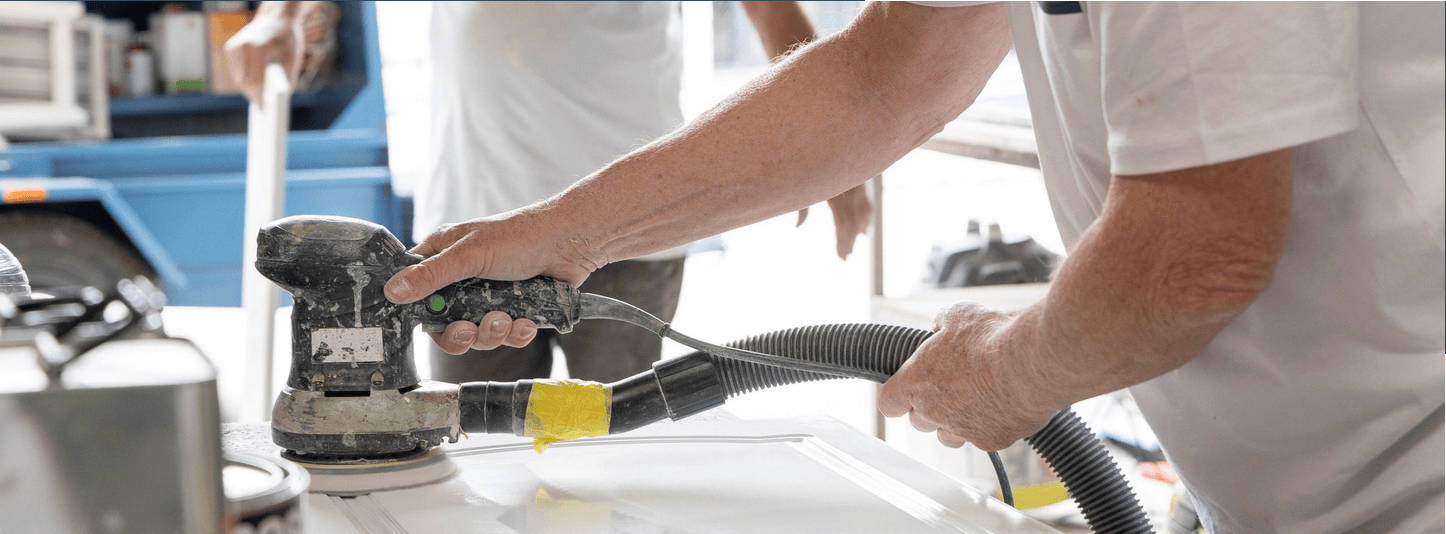
- Thorough preparation This is where most cheap paint jobs fail. Proper prep can include cleaning to remove grease, sanding or scuffing, repairing chips and dents, filling minor imperfections and applying the right primer for the specific surface, for example laminate, timber, or thermofoil.
- Removal of doors and hardware Doors and drawer fronts are taken off, hardware is removed, and pieces are labelled so everything goes back exactly where it came from.
- Controlled spraying Doors and panels are sprayed with professional equipment. This creates a smooth, even finish that you simply cannot get with brushes or rollers. The product might be a 2-pack system, polyurethane, or another specialist coating chosen for durability and appearance.
- On-site spraying of fixed sections The frames and fixed panels that cannot be removed are masked up and sprayed in place, with care taken to protect benchtops, splashbacks, appliances and adjacent areas.
- Curing and reassembly Once the coating has cured to specification, doors, drawers and hardware go back on, and any touch ups or adjustments are handled before handover.
The aim is not just to change the colour. The aim is to create a finish that looks intentional, suits your space and holds up in a working kitchen.
Why Perth Homeowners And Commercial Professionals Are Choosing Respraying
Across Perth, more homeowners and commercial operators are choosing respraying as their first option when the kitchen looks tired. The reasons are practical.
- You get a fresh look without a full demolition If your layout works and your cabinets are solid, tearing everything out can feel like a waste. Respraying focuses only on the visible surfaces, so you get visual impact without the chaos of a full renovation.
- It suits real-world budgets Full cabinet replacement comes with cabinet costs, benchtop changes, trade coordination, plumbing impacts and more hidden extras. Respraying targets the part that most people actually notice, which makes it a far more budget conscious way to refresh a kitchen.
- Less downtime, less disruption Whether you are feeding a family or running a commercial kitchen, you cannot afford long periods where the space is out of action. Respraying has a much tighter timeline compared to full replacement, so you get your kitchen back sooner.
- Flexible style choices You are not limited to stock colours or finishes. You can go from dark to light, gloss to matt, neutral to bold, or align with your brand colours in a commercial setting. That flexibility is a big part of the appeal.
- It fits eco conscious renovation goals Keeping existing cabinetry and upgrading the finish reduces waste. You use what you already have, instead of sending good material to landfill and ordering brand new boxes and doors.
Perth kitchens, both residential and commercial, need finishes that can take a beating. Heat, humidity pockets, regular cleaning and frequent use will expose any shortcuts fast. That is why the right respraying process, with the right products, has become such a popular choice. It respects both the climate and the workload.
What You Will Learn In This Guide
This post is written for you if you are weighing up whether to replace, resurface or respray your cabinets, and you want a clear, practical breakdown instead of vague promises.
Across the next sections, you will see:
- What typical Perth homeowners and commercial professionals struggle with You will recognise the usual problems, like tight budgets, limited time, clashing colours and dated finishes that drag the whole space down.
- How respraying compares on cost You will understand where the savings usually come from, what you still need to budget for, and how to think about cost without cutting quality.
- How much time you actually save We will walk through why respraying is usually faster, what kind of interruption you can expect, and how that plays out for families and commercial operations.
- The design freedom you get You will see how colour, sheen level and finish type can shift your kitchen from dated to current, and how to think about choices that suit Perth properties and local tastes.
- The environmental angle You will learn how respraying fits into more sustainable renovation habits, and what that means in practical terms.
- What modern respray finishes are capable of We will cover durability, resistance to moisture and wear, and how these finishes hold up in Australian conditions.
- Impact on property appeal You will see how a sharper looking kitchen can support your goals, whether you want a home you feel proud of or a commercial space that presents well to clients and staff.
- How to choose the right people for the job You will get straightforward criteria for selecting a respraying specialist in Perth, plus what to expect before, during and after the work.
The purpose of this guide is simple.
You will walk away knowing whether respraying your kitchen cabinets is the right move for your space, your budget and your timeline, and you will know what to look for if you decide to go ahead.
If you are sick of looking at dated cabinets but you are not keen on a full gut renovation, you are exactly who this post is written for. Let us get into what is really driving your decision and how respraying can address it.
Understanding Your Real Renovation Challenges
Before you decide whether to respray, replace or live with what you have, you need to be honest about what is actually driving your kitchen decision. For most Perth homeowners and commercial operators, it comes down to a mix of money, time and appearance, all filtered through local conditions and real life pressure.
You are not just choosing a colour. You are balancing budgets, schedules, trading hours, family routines and long term plans for the property. If you get clear on those pieces first, it becomes obvious why cabinet respraying fits so many Perth kitchens.
Budget Pressure Without Wanting a “Cheap” Result
Most people I speak with want the same thing, a kitchen that looks sharp and current, without burning through cash that would be better spent on other parts of the property. Full replacement can blow out fast once you add cabinetry, benchtops, trades, electrical changes and unexpected extras.
On the residential side, that might mean:
- You have a working kitchen, but the colour and finish are dragging the whole house down.
- You want a better looking kitchen for everyday living, not just resale, but you still need to respect a set budget.
- You are trying to prioritise, and cabinets are only one piece of a bigger renovation list.
On the commercial side, the picture is similar, but with different pressure points:
- You have to present a clean, modern space for clients, staff or customers, but capital expenditure has limits.
- You might answer to stakeholders who expect visible improvement without heavy structural work.
- You need predictable costs, not a renovation that keeps adding surprise line items.
How respraying speaks to budget constraints
Respraying laser focuses on what people actually see, the fronts and visible panels. You keep the existing cabinet carcasses, and you avoid the cost of full demolition, new cabinet construction and many of the flow on trades. That shift alone can put a much better looking kitchen within reach of a modest, clearly defined budget.
You can also stage work if needed. For example, you can respray cabinets now, then tackle benchtops or splashbacks at a later point, instead of trying to fund everything at once. That kind of flexibility is hard to get with full replacement.
Time Limits and the Need to Keep Operating
Time is often a bigger headache than money. In a family home, losing the kitchen for too long can throw everything out, from school mornings to dinners and entertaining. In a commercial space, downtime has a direct cost. Every day a kitchen or break area is out of action can affect trading, bookings or staff comfort.
Common realities for Perth homeowners include:
- You cannot be without a functioning kitchen for more than [insert timeframe] without serious disruption.
- You might have only certain weeks that work, for example around school holidays or work rosters.
- You want trades in and out quickly, without your home feeling like a construction site.
For commercial operators, the stakes are even clearer:
- You need to minimise closure or reduced service hours.
- You need a process that is predictable, with clear start and finish points.
- You may need work done around trading times, or in tight shutdown windows.
How respraying fits tight timelines
Because respraying does not involve ripping out cabinets, changing layouts or re-running services, the overall timeline is much shorter and more controlled. There is still proper preparation, spraying and curing, but you are not waiting on joinery fabrication, extensive demolition or multiple follow on trades.
In practical terms, that usually means:
- A clear schedule from the specialist, with defined stages such as removal, off-site spraying, on-site spraying and reinstallation.
- Shorter periods where the kitchen is partially out of action, instead of a prolonged full shutdown.
- For commercial spaces, a better chance of aligning work with low demand periods or planned closures.
Aesthetic Goals That Actually Suit Perth Properties
Most people know they are unhappy with how their kitchen looks, but they are not always sure exactly what they want instead. Some are sick of dark timber. Others are over high gloss or dated profiles. Commercial clients might need cabinets that reflect a brand palette or a more professional, cohesive look.
Common aesthetic goals for Perth homeowners include:
- Brightening up a space that feels small or gloomy.
- Modernising a dated colour that clashes with newer flooring or furniture.
- Creating a consistent look with the rest of the home, especially in open plan layouts.
Commercial clients often aim for:
- Cabinet colours that align with brand identity or existing fitout tones.
- A finish that looks professional and deliberate, not patched together.
- Surfaces that still look good under heavy use and frequent cleaning.
How respraying supports clear, controlled style changes
Respraying lets you change the visual impression of the kitchen without touching the layout. You can shift from heavy to light, from loud to calm, or from mismatched to coordinated. Since you are working with coatings instead of new joinery, you also have wide freedom to choose colours, sheen levels and finish types that are appropriate for Perth light, coastal influence and local taste.
For commercial spaces, that means you can dial in specific brand colours, or create a neutral backdrop that works with signage and other fitout elements. You get a deliberate, designed look without funding a full strip out.
Local Conditions and Practical Performance
Perth kitchens, both residential and commercial, deal with a particular mix of heat, occasional humidity pockets and regular coastal influence. Surfaces cop frequent cleaning, regular cooking activity and in many cases, strong natural light that will highlight every flaw.
Your cabinets need to look good, but they also need to cope with moisture, wiping, knocks and everyday abuse. If you are spending money on an update, you do not want to be watching the finish fail after a short period.
How respraying addresses performance concerns
Modern respraying systems use coatings designed for high wear environments. When applied correctly, with thorough preparation and compatible primers, these finishes are far more resilient than standard hardware store paints. They are built to handle cleaning, minor impacts and the temperature changes that come with a working kitchen.
For you, that means the upgrade does two jobs at once. It hits your aesthetic goals and it gives you a finish that can live in a Perth kitchen without constant worry or maintenance drama.
Why These Challenges Point Directly to Respraying
When you put it all together, the pattern is clear. You want a kitchen that looks current, respects your budget, fits a realistic timeframe and stands up to local conditions. Full replacement can do that, but at a much higher cost in money, time and disruption.
Respraying lines up neatly with the real world constraints most Perth homeowners and commercial operators face.
It keeps what already works, updates what does not and targets the surface that everyone actually sees. As you move through the rest of this guide, keep those core pressures in mind. Budget, time, appearance and performance. You will see how respraying stacks up on each of them, and why so many people are choosing it as their first option instead of a last resort.
Cost-Effectiveness Of Respraying Kitchen Cabinets
If you strip away all the noise, most people in Perth are asking one thing, how do I get a kitchen that looks new, without paying for a new kitchen. That is exactly where cabinet respraying shines, because it targets the visible surfaces, not the entire structure.
Think of it like this.
You are not paying to rebuild what already works, you are paying to upgrade what you see and touch every day.
Where The Real Savings Usually Come From
When you compare respraying to full cabinet replacement, the cost difference is not magic. It comes from very specific areas that you can break down and plan around.
1. Material Costs Stay Under Control
With full replacement, you pay for brand new cabinet carcasses, new doors, new drawer fronts, and often new panels and trims. If you change layout, you can also be into new end panels, fillers and custom pieces. All of that adds up fast.
With respraying, you keep the existing carcasses and doors. You pay for:
- Professional coating products suited to kitchen use
- Primers and fillers that match your cabinet material
- Protective materials for masking and site protection
You are shifting from a materials heavy project to a skills heavy project. You are investing in expertise and finish quality, not a truck full of new joinery.
You save on what you do not replace.
If your cabinets are structurally sound, there is no financial sense in throwing them out just to get a new colour and finish.
2. Labour Stays Focused On Finishing, Not Demolition
Full replacement is labour intensive. You pay for:
- Demolition and removal of old cabinets
- Patching and repairing walls and floors once everything comes out
- Installation of new carcasses and doors
- Adjustment, fitting and alignment of all new components
Every extra step is more hours, and more hours is more cost. If any measurement is slightly off, more time disappears into fixes.
With respraying, labour is concentrated in preparation and spraying:
- Thorough cleaning, repairs and surface prep
- Removal and reinstallation of doors and drawer fronts
- Controlled spraying off site and on site
- Detail work, such as touch ups and refitting hardware
It is still skilled work, but you are not funding a full tear out and rebuild. You are funding the hours that directly affect how the kitchen looks and feels.
3. You Avoid Hidden Flow On Costs
Full cabinet replacement rarely stays in its lane. Once you pull cabinets out, you often trigger other costs that were not in the original plan, such as:
- Benchtops that no longer fit or suit the new layout
- Plumbing adjustments if sinks or dishwashers move
- Electrical changes for appliances, lighting or power points
- New splashbacks if existing tiles are damaged during removal
- Flooring repairs where the old cabinets used to sit
Each of those line items brings in new trades and new invoices. That is where a budget that looked reasonable at the start can spiral.
Respraying keeps the existing footprint.
Because you are not pulling cabinets out, you usually avoid:
- Plumbing changes
- Electrical relocations
- Benchtop replacement driven by layout changes
- Major tiling or flooring repairs
You can choose to upgrade benchtops, splashbacks or appliances if it suits your plan, but you are not forced into it just to make the new cabinets work. That control is a big part of cost effectiveness.
4. Disposal And Rubbish Handling Stay Minimal
Removing a full kitchen creates a lot of waste. You need someone to:
- Take out old cabinets
- Transport and dispose of the material
- Potentially manage skip bins and council or strata requirements
Those costs are not always obvious in early quotes, but they appear somewhere, either as a separate line or embedded in labour charges.
Respraying generates far less waste. You are mainly working with coatings, masking materials and minor repairs. That keeps both direct disposal costs and indirect handling costs down.
Budget Friendly Approaches That Still Respect Quality
Saving money is pointless if the finish looks cheap or fails quickly. The key is to cut cost in the right areas, and hold the line where it matters for long term value.
Prioritise The Surfaces People Notice First
When you walk into a kitchen, you do not look at the inside of a cabinet box. You see:
- Cabinet doors and drawer fronts
- End panels and island faces
- Bulkheads or visible trims
Respraying zeros in on those areas. To keep your budget tight without losing impact, focus your spend on:
- A high quality spray finish on all visible fronts
- Careful colour selection that lifts the whole room
- Clean, consistent detailing around edges and joins
If the cabinet interiors are already in decent shape, you can leave them as they are. That alone saves a significant amount of time and money.
Stage Upgrades Instead Of Doing Everything At Once
A smart way to protect your budget is to plan the renovation in stages. For example, you can:
- Stage 1, respray cabinets and update handles
- Stage 2, update benchtops at a later date if needed
- Stage 3, adjust lighting, splashbacks or flooring when it suits
Because respraying works with your existing layout, it plays nicely with this staged approach. You get a big visual jump from the new cabinet finish, which can buy you breathing room before you commit to other changes.
Spend On Prep And Product, Not Fancy Extras
If you want a cost effective result that still looks professional, your money is best spent on:
- Thorough preparation, cleaning, sanding and repairs
- High performance primers and top coats made for kitchen use
- Experienced application with proper spray equipment
Where you can save without hurting quality:
- Keeping the existing door profiles and only changing the colour
- Choosing a classic, versatile colour that will not date quickly
- Reusing hardware if it is still in good condition, or selecting practical mid range handles and hinges
A flawless mid range finish beats a fancy design with poor application every time.
If a quote looks suspiciously cheap, it usually means corners will be cut on prep, product, or both. That is how you end up paying twice, once for the cheap job, and again to have it fixed.
How To Compare Quotes Without Getting Misled
When you are weighing up respraying against replacement, or comparing different respray quotes, use a simple checklist. Look for clear information on:
- Scope, exactly which doors, panels and sections are included
- Products used, including type of coating system and primers
- Preparation steps, such as repairs, sanding, degreasing and masking
- Timeline, estimated duration and any off site work
- Inclusions, removal and reinstallation of doors, protection of benchtops and floors, basic hardware refitting
- Exclusions, things like benchtop replacement, plumbing, electrical or new appliances
Use this as a framework to compare options:
- List each quote side by side.
- Note what is included under each item in the checklist.
- Mark any areas that are vague or missing detail.
- Ask direct questions to fill those gaps before you decide.
This keeps the comparison grounded in real scope and quality, not just the final number at the bottom of the page.
Why Respraying Often Delivers The Best “Look Per Dollar”
When you put all of this together, cabinet respraying often gives you the best visual impact for the money you spend. You gain:
- A kitchen that looks refreshed and current
- Control over material and labour costs
- Less risk of budget blowouts from flow on trades
- The option to stage other upgrades over time
For Perth homeowners, that means more room in the budget for other parts of the house. For commercial operators, it means a sharper looking space without tying up capital in a full rebuild.
The key is simple. Use respraying to upgrade what people actually see, protect the areas that already work, and put your money where it delivers lasting value instead of one time demolition.
Time Efficiency And Minimal Disruption
If you live or work in Perth, you probably cannot afford to lose your kitchen for an open ended renovation. That is where cabinet respraying pulls ahead. It delivers a new look on a tighter schedule, with far less chaos in your home or commercial space.
Shorter project time, smaller headache.
Let us break down how respraying keeps your kitchen functional, and why that matters so much for both busy households and commercial operations.
Why Respraying Is Usually Much Faster Than Replacement
Full cabinet replacement is not just about putting in new doors. It is a chain of dependent steps, each one waiting on the last. Demolition, measurements, fabrication, install, follow up trades. Any delay in that chain can stall the whole project.
Respraying follows a much leaner process:
- Prep and removal in your kitchen, doors and drawer fronts come off, hardware is removed, and fixed sections are masked and prepared.
- Off site spraying of doors and panels happens in a controlled environment, while your kitchen remains mostly usable.
- On site spraying of frames and fixed panels is done with protection in place for benchtops, splashbacks and appliances.
- Curing and reinstallation brings everything back together, with doors rehung and hardware refitted.
No demolition. No waiting for new carcasses to be built. No major structural changes that drag out the timeline.
For most Perth homes and commercial kitchens, that streamlined sequence means you spend far less time living or working around a half finished construction zone.
What “Less Disruption” Actually Looks Like At Home
In a residential kitchen, disruption is not just about whether the cabinets are in place. It is about how much of your normal routine you can keep while work happens.
With a typical respray process, you often keep access to:
- Benchtops for basic food prep
- Sink and plumbing, since there is no need to disconnect them
- Appliances such as fridge, oven and cooktop, protected but still in position
- Most walkways and access, because there is no large scale demolition debris
In practical terms, that means you can usually:
- Prepare simple meals at home instead of relying on takeaway for a long stretch
- Keep kids, pets and daily life moving with less stress
- Avoid large areas of dust and rubble that would come with ripping out joinery
Your kitchen might look a bit strange for a short period, but it still works.
Compare that to full replacement, where you often lose benchtops, sink and cooking appliances at the same time. That is when life gets messy, fast.
How Commercial Spaces Benefit From Tighter Timelines
In commercial environments around Perth, time is not just an inconvenience, it is money and reputation. Every day your kitchen, staff area or client facing space sits in pieces can impact bookings, service levels or staff satisfaction.
Respraying gives you a few clear advantages.
1. Easier To Align With Quiet Periods
Because the process is more compact and predictable, it is far easier to line it up with:
- Scheduled shutdown periods
- Seasonal lulls or quieter trading windows
- Non peak hours, where on site work can happen with minimal impact
You can work with the respraying specialist to map out a schedule that respects your trading pattern, instead of having to shut down for a long and uncertain renovation window.
2. Less Impact On Compliance And Food Safety Routines
For commercial kitchens and food related spaces, ripping out and rebuilding cabinetry can trigger a lot of secondary tasks such as:
- Temporary relocation of prep zones
- Intensive cleaning before reopening
- Extra checks to make sure dust and debris are cleared
With respraying, you still take care to protect food safety and hygiene, but you are not dealing with the same level of demolition dust and building residue. Work can be structured to avoid active food handling areas during service, and to allow for thorough cleaning in a much shorter closure period.
3. Staff Disruption Stays Contained
Staff get frustrated when facilities are half usable for long stretches. With respraying, they deal with a more defined and shorter period of disruption. That keeps morale and productivity steadier, and reduces the number of workarounds needed during the project.
What You Can Expect Day To Day During A Respray
To understand the disruption level, it helps to picture the typical stages and how they affect your space. Use this as a general framework.
Stage 1, Preparation And Door Removal
What usually happens:
- Specialists protect floors and nearby surfaces
- Doors and drawers are removed and labelled
- Hardware is taken off and stored
- Surfaces are cleaned, degreased and lightly sanded
Impact on you:
- Cabinet contents might need to be cleared or partially rearranged
- Kitchen is still accessible, just without some doors and drawers
- Noise from light sanding and prep, but no demolition racket
Stage 2, Off Site Spraying Of Doors And Panels
What usually happens:
- Doors and removable panels are taken to a workshop or spray booth
- Multiple coats and curing happen away from your property
Impact on you:
- Kitchen remains usable, just more open without doors
- No onsite paint fumes from this part of the process
- Daily life can mostly carry on as normal
Stage 3, On Site Spraying Of Frames And Fixed Sections
What usually happens:
- Specialists mask benchtops, appliances, floors and adjacent walls
- Frames and fixed panels are sprayed in place
- Ventilation and extraction are used appropriately
Impact on you:
- Short periods where the kitchen area is off limits while spraying takes place
- Some odour from the coating system, managed with ventilation
- Usually planned so you know exactly which times to avoid the area
Stage 4, Curing, Reassembly And Hand Over
What usually happens:
- Coatings are given time to cure according to product specifications
- Doors and drawers are refitted
- Hardware is installed or replaced
- Protective masking is removed and the area is cleaned
Impact on you:
- Brief adjustment period to avoid heavy impact on freshly cured surfaces
- Full access returns quickly compared to a replacement project
You always know where you stand and when you get your kitchen back.
Planning Around The Shorter Downtime
To get the most from the time savings, it helps to plan your own schedule around the work. Here is a simple framework for both homeowners and commercial clients.
For Perth Homeowners
- Pick a realistic window that sits between major events, such as school holidays, visitors or other renovation work.
- Pre plan simple meals that do not need full use of every appliance, for the days when access is limited.
- Set up a temporary coffee or snack station in another room so morning routines stay calmer.
- Clear benchtops and cabinet contents in advance, so the respray team can move fast once they arrive.
For Commercial Clients
- Map your trading pattern and identify [insert timeframe] windows that are naturally quieter.
- Coordinate with the respraying specialist to schedule off site work first, then on site work in low impact periods.
- Communicate clearly with staff about which areas will be restricted, and when.
- Prepare a cleaning and reopening checklist so you can move back into full use quickly once the work is complete.
Why Less Disruption Often Matters More Than You Think
Cost gets most of the attention when people compare respraying to replacement, but time and disruption are just as important. In real life, these are the areas where people feel the pain of a renovation the most.
- Families get tired of eating out and living around dust.
- Businesses get frustrated when workarounds drag on.
- Everyone loses patience when timelines blow out.
Respraying respects your schedule, not just your budget. It lets you improve the kitchen without putting the rest of your life or business on hold for longer than necessary.
The less time your kitchen spends under plastic, the better the renovation feels.
That is the real advantage of a well planned cabinet respray. You get the visual upgrade you want, and you keep your household or operation moving, instead of living in a construction site for longer than you need to.
Aesthetic Flexibility And Customisation
When you respray kitchen cabinets, you are not locked into a handful of basic colours or a single finish. You get a wide design toolkit, without touching the layout or ripping anything out. For Perth homes and commercial spaces, that level of flexibility is exactly what you need to hit modern style expectations and clear brand standards.
Respraying gives you serious design control, without a full remodel.
Let us break that down so you can see what is actually possible.
The Range Of Colour Options You Can Work With
With a professional respray, colour choice is almost unlimited. You are not choosing from a short stock board of prefabricated doors. You are working with coating systems that can be tinted to a huge range of shades and tones.
In practical terms, that means you can:
- Match existing colours in your home or fitout so the kitchen ties in with walls, flooring, or surrounding joinery.
- Shift from dark to light if your current kitchen feels heavy or cramped. Lighter tones can help a smaller Perth kitchen feel more open and airy.
- Embrace contrast with darker island cabinets and lighter wall cabinets, or vice versa, for a more designed, deliberate look.
- Use accent colours strategically on selected banks of cabinets, open shelving, or overhead units, while keeping the rest neutral.
For residential kitchens, this means you can follow current style directions, such as:
- Soft neutrals that work with natural light and timber flooring.
- Fresh, clean whites that modernise older tiles and benchtops.
- Muted colour tones that feel calm but not bland.
For commercial kitchens or staff areas, you can align cabinets with key brand colours or keep things neutral so other branded elements carry the main visual weight. Either way, colour becomes a controlled decision, not a compromise.
Finish Types, From Subtle To Statement
Colour is only half the story. The finish you choose, meaning the sheen level and texture, has a big impact on how the kitchen looks and how it behaves in daily use.
Common finish options include:
- Matt, a low sheen look that hides minor imperfections and fingerprints well, ideal for busy family homes or high touch commercial areas.
- Satin, a slight sheen that feels refined and modern, a strong all round choice that suits most Perth kitchens.
- Semi gloss, more reflective, often used when you want a crisp, clean look that bounces light around the room.
- Specialty finishes such as textured or soft touch systems, used when a specific design concept calls for a different visual or tactile effect.
This choice is not just about appearance. It is also about practicality.
- Matt and satin finishes typically show fewer streaks after cleaning.
- Higher sheen levels highlight surface preparation, which is great if the prep is meticulous, less forgiving if it is not.
- In bright Perth light, overly glossy finishes can sometimes show reflections and minor flaws more clearly.
During planning, a good respraying specialist will talk through how you use the kitchen, the lighting in your space and your cleaning habits. That helps you land on a finish that looks right and behaves well for your situation.
Aligning With Current Style Directions In Perth Homes
If you own a home in Perth, you probably want your kitchen to feel current, not stuck in another era. Respraying makes it far easier to refresh the visual language of the space without tearing into the structure.
Here is how you can use respraying to bring your kitchen in line with modern tastes.
- Refresh dated colours, if you have older timber tones, heavy reds, creams that have yellowed, or bold colours that no longer fit, a new respray can neutralise that visual noise fast.
- Create cohesion in open plan layouts, in many Perth homes, the kitchen flows straight into living and dining areas. Respraying lets you align cabinet colours with nearby walls, trims and furniture, so the whole zone feels intentional.
- Balance old and new elements, you might keep an existing benchtop or tiled splashback for budget reasons. With the right cabinet colour, those elements can look fresher, instead of standing out as leftovers from a past renovation.
You are free to follow style directions that feel right for you. You just do it through coatings rather than new cabinetry. That keeps cost and disruption down while still delivering a strong visual update.
Customisation For Commercial And Brand Focused Spaces
For Perth commercial clients, cabinet colour and finish are not just personal preference. They are part of your brand presence. A reception area, staff kitchen or client facing break space says something about your business before you speak.
Respraying lets you treat those cabinets like any other designed surface.
- Brand colour matching, professional coatings can be matched closely to brand guidelines, so cabinets sit in the same visual family as your logo, signage and digital assets.
- Tiered colour schemes, you can use a primary brand colour sparingly on feature cabinets and keep the rest neutral, which keeps the space calm while still on brand.
- Professional finish quality, a smooth, consistent respray looks intentional, not temporary. That matters if clients or staff spend a lot of time in those areas.
Because you are not changing the layout or base structure, you can bring an older fitout into line with current brand standards without requesting full capital works. That is a strong advantage when you need visual change, but you are working within set budgets or approval frameworks.
Using Colour And Finish To Solve Real Design Problems
Colour and finish are not just about taste. Used well, they solve practical issues in both homes and commercial spaces around Perth.
Here are some common design problems you can address through respraying, along with a simple way to think about each one.
- Kitchen feels dark
Framework to address it:
- Move cabinet colours lighter, especially on upper units.
- Choose a satin or semi gloss finish to reflect more light.
- Keep handles, if updated, in a finish that does not visually weigh the doors down.
- Space looks busy and cluttered
Framework to address it:
- Use a restrained, neutral palette on most cabinets.
- Limit accent colours to small runs or island units.
- Pick a consistent sheen level across all sprayed surfaces.
- Old surfaces clash with newer additions
Framework to address it:
- Identify the fixed elements you plan to keep, such as benchtops and floors.
- Select cabinet colours that sit comfortably next to those surfaces.
- Test sample boards against those materials before signing off on the final choice.
- Brand identity is not visible in staff or client areas
Framework to address it:
- List [insert number] key brand colours and choose which belong in the kitchen area.
- Decide which cabinets, if any, should carry those colours and which should stay neutral.
- Work with the respraying specialist to confirm a finish type that looks professional in your lighting conditions.
By thinking in terms of simple frameworks like these, you avoid guesswork and end up with a kitchen that solves problems instead of just changing colour for the sake of it.
How To Choose Colours And Finishes With Confidence
If you are not used to making design decisions, the huge range of options can feel overwhelming. A structured approach keeps it simple and avoids regret.
Use this step by step method as a guide.
- Clarify the mood
Decide how you want the kitchen to feel, such as bright and energetic, calm and minimal, warm and welcoming. This mood will steer your colour and sheen choices. - Audit the fixed elements
List the surfaces that are staying, for example benchtops, splashbacks, flooring, major appliances. Note their dominant colours and undertones, such as warm, cool, greyed, creamy. - Shortlist [insert number] cabinet colours
Based on the mood and existing elements, pick a small shortlist, not a huge fan deck. Include at least one safer neutral and one bolder option. - Decide on sheen level
Factor in natural light, cleaning frequency and the level of surface perfection you expect. Choose between matt, satin or semi gloss with those realities in mind. - Test in real light
View samples in your actual kitchen or commercial space, at different times of day. Perth light changes the way colours read, so do not skip this step. - Lock in a final combination
Confirm one main cabinet colour, any accent areas if you plan them, and the exact finish type. Make sure this plan is written into the agreement with your respraying specialist.
This process removes a lot of stress. You are not picking a random colour on the day. You are following a clear, staged decision path.
Refreshing Style Without Structural Change
The key advantage of respraying, from a design point of view, is simple. You can create a major visual shift while leaving the physical kitchen intact.
- The layout stays the same, so no new learning curve in how you use the space.
- Cabinet boxes stay, which avoids problems with benchtop and flooring interfaces.
- Your focus is entirely on the visual layer, colour and finish, which is where most of the perceived age of a kitchen sits.
That is why respraying works so well for Perth homeowners who want a kitchen that feels current, and for commercial clients who need spaces that reflect a clear brand identity. You get the style upgrade you are chasing, in a controlled, cost conscious way, without committing to extensive building work.
Environmental Benefits Of Respraying Kitchen Cabinets
If you care about how much waste a renovation creates, respraying your kitchen cabinets is one of the smartest moves you can make. Instead of ripping out perfectly solid cupboards and sending them to landfill, you keep the existing structure and upgrade the surface. That single decision cuts down waste, energy use and the environmental footprint of your project in a very direct way.
Respraying works with what you already have, instead of throwing it away.
Let us break down exactly how that plays out for Perth homes and commercial properties that want a cleaner, more responsible way to renovate.
Extending The Life Of Cabinets You Already Own
Most kitchen cabinets that look tired are not actually broken. The carcasses are usually fine, the hinges still do their job, and the layout works. The problem is visual, worn or dated doors and panels. Respraying targets that top layer instead of condemning the whole unit.
Think of it as a structural check before you decide to demolish.
When you respray, you effectively:
- Refresh the protective layer on surfaces that face steam, grease, UV light and regular cleaning.
- Repair small defects such as chips, minor swelling or surface scratches, instead of replacing entire sections.
- Stabilise what is working so cabinets continue to function reliably for many more years.
By doing that, you push the replacement timeline much further out. Every extra year you get from your existing cabinets means less demand for new raw materials and less manufacturing energy used somewhere else.
Longevity is one of the most underrated environmental wins.
If you can keep a solid kitchen out of the skip bin and in service, with a new durable finish, you are already ahead of most standard renovation approaches.
Cutting Renovation Waste At The Source
Full kitchen rip outs create a huge amount of physical waste. Cabinets, doors, trims, bulkheads, sometimes benchtops and tiles all end up as demolition rubble. It has to go into skips, be transported, sorted and disposed of. None of that is light on the environment.
Respraying tackles the problem from the opposite end. You avoid demolition wherever possible.
- Cabinet carcasses stay in place, so there are no piles of broken chipboard or MDF.
- Doors and drawer fronts are reused, not sent off as bulk waste.
- Benchtops and splashbacks are often retained, because the layout stays consistent and does not force you into replacing them.
The only waste from a well managed respray job is usually:
- Masking materials such as tape and plastic
- Used sanding materials
- Offcuts from minor repairs or adjustments
Compared to a skip full of old cabinetry, that is a very small footprint.
Less demolition means less landfill, less transport and less mess on site.
For Perth homeowners and commercial clients who care about sustainability, that simple change in approach can make the difference between a renovation that feels wasteful and one that feels responsible.
Reducing The Environmental Cost Of New Cabinet Production
Any new set of cabinets comes with an environmental price tag, even if you never see it. There is energy used in manufacturing, emissions from transport, and raw materials drawn from timber, engineered board or other sources. When you order a full new kitchen, you are indirectly buying into that entire chain.
Respraying shifts the balance. Instead of commissioning a new run of carcasses and doors, you invest in:
- Specialist coatings designed for long life in kitchen environments
- Prep work that makes the most of the materials you already own
- Labour that upgrades, instead of factories that rebuild
From an environmental point of view, that means:
- Lower demand for new raw materials, since you are not ordering complete cabinet systems.
- Less manufacturing energy tied to your project, because most of the work happens on site or in a local workshop, not in large production facilities.
- Reduced transport impact, fewer large items shipped in and fewer loads of old joinery hauled out.
Even without exact numbers, the logic is straightforward. The greenest cabinet is the one you already have, provided it still works and can carry a quality new finish.
Aligning With Eco Conscious Renovation Habits
Across Perth, more homeowners and businesses are paying attention to how their renovation choices affect the environment. That shows up in small and large decisions, such as:
- Choosing durable finishes over disposable quick fixes
- Reusing existing structures where possible
- Planning work that minimises waste, dust and collateral damage
Cabinet respraying slots directly into that mindset.
It is a practical way to “use what you have” without settling for a tired kitchen.
If you are already making eco focused choices in other areas, such as:
- Selecting efficient appliances
- Using low energy lighting
- Improving insulation and shading
then keeping your existing cabinets and upgrading the coating is a natural extension of that same thinking. You are cutting waste where it actually matters, the big and heavy items, not only the small, easy wins.
Less Site Impact, Cleaner Renovation Footprint
Environmental responsibility is not only about what goes to landfill. It is also about what happens in and around your property while the work is underway.
Full replacement often means:
- Extended dust, noise and debris
- Heavy vehicle movements for delivery and disposal
- Potential damage to surrounding finishes that then need repair
That kind of disruption can impact air quality inside the property, and it often expands the scope of work, which means more materials and more trades.
With a well controlled respray, you usually have:
- Targeted sanding and prep, rather than large scale demolition
- More contained work zones with masking and protection in place
- Shorter overall project timelines, which means less cumulative impact on the building
From an environmental and wellbeing angle, that is a much lighter touch. Less dust, less movement, less disturbance across the property.
Making Conscious Product Choices Within The Respray Process
Not all coatings or methods are equal. If sustainability matters to you, you can take that extra step and talk with your respraying specialist about the products and systems they use.
Use this simple framework when you discuss options:
- Durability first
A longer lasting coating that resists wear, moisture and cleaning is usually the greener option, even if its initial impact is higher than a basic, low cost product. Fewer repaints mean fewer materials used over the life of the kitchen. - Appropriate chemistry
Ask about the type of system used, for example water based or solvent based, and why it has been chosen for your specific cabinets. The goal is a balance between performance, appearance and emissions that makes sense for a working kitchen in Perth conditions. - Application controls
Check that spraying is done in a way that limits overspray and waste, such as using proper equipment settings, masking and, where relevant, spray booths for off site work.
You do not need to become a coatings expert. You just need to ask direct questions. A professional operator will be able to explain how their system performs and how they manage environmental impact during the job.
How To Weave Sustainability Into Your Overall Kitchen Plan
Respraying is one piece of the environmental puzzle. If you want your whole kitchen upgrade to sit on solid ground from a sustainability point of view, think about the rest of the project the same way.
Here is a simple checklist you can use as you plan, whether you are a homeowner or a commercial client in Perth.
- Keep what works structurally
Before you decide to replace anything, ask if it is structurally sound and fit for purpose. If the answer is yes, look at ways to refresh it, not remove it. - Target the visible layer
Use respraying for cabinets, and consider similar approaches for other surfaces where practical, so you avoid unnecessary demolition. - Choose durable finishes
Prioritise products and methods that will last. Fewer refresh cycles means less waste and less disruption over time. - Plan coordinated changes
If you do update benchtops or splashbacks, choose materials and suppliers that also value sustainability, and time those changes so you do not redo work twice. - Ask contractors about waste handling
Clarify how offcuts, old fittings and used materials are managed. Look for responsible disposal and recycling where available.
By following that framework, you make sure the environmental benefits of respraying do not get cancelled out elsewhere in the project.
Why Respraying Fits Perth’s Long Term Mindset
Perth properties often sit in strong natural settings, and many owners want their renovation decisions to reflect a respect for that environment. At the same time, no one wants to live or work in a dated kitchen just to feel responsible.
Respraying bridges that gap.
- You keep the existing joinery out of landfill.
- You reduce your reliance on fresh manufacturing and transport.
- You still end up with a kitchen that looks and feels current.
Eco conscious renovation does not have to mean compromise.
If you choose cabinet respraying as your main move, you line your kitchen upgrade up with sustainability goals in a very real, very practical way. You respect the resources already in your property, you cut waste at the source, and you invest in a finish that extends the life of what you own, instead of replacing it before its time.
Durability And Quality Of Modern Respraying Techniques
If you are going to invest in respraying your kitchen cabinets, you want to know one thing up front, will the finish actually last in real Australian conditions, especially around Perth’s heat, coastal air and busy kitchens. With the right materials and process, the answer is yes. Modern cabinet respraying is built around durability, not quick cover ups.
A good respray should feel and behave like a factory finish, not like a coat of house paint.
Let us break down what has changed in recent years, and what that means for how your cabinets stand up to wear, moisture and daily use.
Why Modern Coating Systems Outperform DIY Paint
The biggest difference between a professional respray and a DIY job from the hardware aisle is the coating system. It is not just “paint”. It is a layered system designed for high use surfaces.
Professional cabinet resprays typically use products such as:
- High performance primers that bond to tricky surfaces like laminate, thermofoil and existing 2 pack finishes, giving the top coats something solid to grip.
Specialist top coats formulated for cabinetry, with higher hardness, better chemical resistance and stronger adhesion than standard wall paints.
- Multi coat systems that combine primer, build coats and finish coats to create a thicker, more protective film over the substrate.
Those products are engineered to resist common kitchen stressors such as regular wiping, cleaning agents, cooking vapours, sunlight and constant handling. When they are matched correctly to the cabinet material and applied with proper technique, you end up with a finish that behaves much closer to a factory sprayed door than a brushed on repaint.
This is why a professional system survives where a quick DIY job starts chipping and peeling.
How Preparation Directly Affects Durability
Durability does not start with the top coat. It starts with how well the surface is prepared. Shortcuts here are the reason some repaints fail long before they should.
A quality respray process will follow a structured preparation sequence, for example:
- Thorough degreasing, removing cooking oils, hand residue and silicone from polishes, so nothing interferes with adhesion.
- Mechanical keying, sanding or scuffing existing finishes so the new coating can lock in properly instead of sitting on a slick surface.
- Repairs and filling, addressing chips, scratches, minor swelling and dents, then sanding them smooth so the finish sits on a level base.
- Substrate specific primers, choosing primers that are compatible with the cabinet material, whether that is laminate, solid timber, MDF or thermofoil.
Each of those steps reduces future risk. Better adhesion means less chance of flaking at handles and edges. Smoother repairs mean less chance of thin spots that wear through. Proper primers mean less chance of reactions between old and new coatings.
A tough top coat on poor prep will still fail. Good prep with the right products is what gives you a long lasting result.
Wear And Tear Resistance In Busy Kitchens
Perth homes and commercial spaces use kitchens hard. Doors get opened and closed constantly. Drawers are slammed. Kids, staff and guests are not always gentle. Cleaning happens often. Your resprayed finish needs to live in that environment without you babying it.
Modern respraying techniques address wear and tear in a few key ways.
- Harder film build
Cabinet coatings are formulated to cure harder than standard interior paints. That gives better resistance to scuffs, micro scratches and abrasion from everyday contact. - Better edge protection
Edges and corners are common failure points. A good sprayer will build coverage on these areas, not just flat faces, so they do not wear through prematurely. - Improved chemical resistance
Quality systems are designed to handle regular cleaning with common household or commercial cleaners, within reason, without softening or staining as quickly. - Consistent film thickness
Spray application lays down a more even coat than brushes or rollers. Consistent thickness translates to more consistent wear across the surface.
The goal is not to create a surface you never have to think about. The goal is to create a surface that handles normal use, regular cleaning and the occasional bump without starting to look shabby after a short period.
Moisture Protection For Australian Conditions
Kitchen cabinetry lives in one of the toughest moisture zones in any property. You have steam from cooking, humidity around dishwashers, splashes around sinks and in Perth, a general mix of heat and coastal influence. If the coating system does not cope with moisture, you will see problems fast.
Modern respray systems address this in three main ways.
- Moisture resistant primers
These help seal porous substrates such as MDF and raw edges, which are especially vulnerable to swelling and breakdown if moisture gets in. - Closed film top coats
The finish layers form a more continuous barrier that resists water ingress. This is particularly important around sink base units, dishwasher surrounds and overheads near range hoods. - Attention to edges and cut outs
Professional preparation includes sealing edges, cut outs and any exposed board, not just the obvious faces. Those are the points that often get missed in basic paint jobs and where moisture can creep in first.
If you have a kitchen that regularly deals with steam bursts, splashes or coastal air, this level of moisture management is vital. It will not turn MDF into marine board, but it does significantly extend how long the substrate stays intact and presentable.
A well sealed, well coated cabinet is far less likely to swell, peel or bubble around high moisture zones.
Curing, Not Just Drying, For Long Term Strength
Another area that directly affects durability is curing time. There is a difference between “touch dry” and “ready for real use”. Modern coating systems are designed to cure to full strength over a set period. Rushing this part shortens the life of the finish.
A professional respraying process will allow for:
- Controlled curing conditions, often off site for doors and panels, where temperature and airflow can be managed to suit the product.
- Specified cure periods, where doors are not reinstalled or put into heavy use until the coating has reached the hardness and chemical resistance it is designed for.
- Clear guidance to you, on how to treat the cabinets in the first [insert timeframe] after installation, such as avoiding aggressive cleaning or heavy impact while the coating completes its cure.
That patience up front pays off. A fully cured system is far more resistant to scratches, impressions from hardware and marking from cleaning than a surface that was forced back into service too early.
Handling Heat, Light And Perth’s Climate Mix
Perth kitchens often deal with strong sunlight, periods of high heat and, in some suburbs, coastal air. All of those elements can stress a poor quality finish. Modern respraying methods and materials are selected to suit that climate mix.
Here is how a good operator will think about it.
- Heat exposure
Cabinets near ovens, cooktops or appliances that vent warm air need coatings that tolerate elevated temperatures without softening or discolouring quickly. Appropriate products and correct film build help with this. - UV influence
In kitchens that receive strong natural light, the colour system and top coats need to handle UV exposure reasonably well, so they do not yellow or fade too fast. Specialist coatings perform better here than generic interior paints. - Movement and expansion
Temperature changes cause minor expansion and contraction in cabinet materials. Flexible enough coating systems, properly bonded through primers, move with the substrate instead of cracking away from it.
The result is a finish that still looks solid when the next summer rolls around, instead of one that only looked good on the first day.
Quality Control In Modern Application Methods
Materials on their own do not guarantee a durable result. How they are applied is just as important. Current best practice in cabinet respraying uses methods that focus on consistency, control and repeatable quality.
That usually includes:
- HVLP or similar spray systems, which give fine atomisation and even coverage without overwhelming the surface with excess product.
- Controlled environments for off site spraying, such as spray rooms or booths where dust, temperature and airflow are managed so the coating lays down and cures properly.
- Systematic process steps, where every door and panel goes through the same cycle of prep, priming, intermediate sanding and top coating, which avoids weak links in the batch.
That level of control is what gives you a finish that is consistent on every door and drawer front, with no thin, vulnerable spots that will fail first.
Durability is rarely an accident. It is the result of a controlled, repeatable process paired with the right products.
What This Means For Daily Use In Your Kitchen
All of this technical detail comes back to a few very practical outcomes for your Perth home or commercial space.
- You can clean the cabinets regularly with appropriate products, without living in fear of every wipe.
- You can open and close doors, use handles and run a busy kitchen without watching the finish fall apart in high touch zones.
- You can expect the coating to handle reasonable moisture and temperature changes in a normal working kitchen environment.
Of course, no finish is bulletproof. Dragging sharp objects across doors, using harsh chemicals beyond what the coating is designed for, or ignoring heavy leaks will cause problems over time. But with a modern respray system, normal, sensible use is exactly what the finish is built for.
How To Make Sure You Get A Durable Respray, Not Just A New Colour
If durability matters to you, the way you choose a respraying specialist should reflect that. Use a simple framework when you speak with potential providers.
- Ask about the coating system
Get clear on what type of primers and top coats they use on kitchen cabinets, and why. Look for coatings described as suitable for joinery or cabinetry, not just general interior walls. - Ask about preparation steps
Have them outline their process for cleaning, sanding, repairs and priming. Vague answers here are a red flag. - Ask about moisture and wear performance
Talk specifically about how the finish handles steam, frequent cleaning and high touch areas such as under sink doors and near dishwashers. - Ask about curing and aftercare
Clarify how long they allow coatings to cure before refitting, and what guidance they give you on caring for the finish in the first [insert timeframe].
When those answers are clear, detailed and confident, you can be far more sure you will get a respray that is not just about colour, but about quality and long term performance in real Australian conditions.
Enhancing Property Value And Visual Appeal
When people walk into a home or commercial space, the kitchen does a lot of the talking. If the cabinets look tired, dated or mismatched, it drags the whole property down. If they look sharp and current, everything else gets a lift. Respraying your kitchen cabinets is one of the most direct ways to improve that visual impact and support property value, without touching walls, plumbing or layout.
A fresh, professional cabinet finish makes your property look better on first sight, and that matters.
Let us look at how a well executed respray improves both appeal and perceived value for Perth homes and commercial spaces.
Why Kitchens Influence Perceived Value So Strongly
People judge a property fast. They look at a few key zones to decide whether it feels “looked after” or “needs work”. The kitchen is always on that list. Even if the structure is solid, worn cabinets signal future expense and effort to whoever walks in.
When your cabinets are resprayed properly, you change that message.
- The kitchen feels “done”, not like a project waiting for the next owner or tenant.
- The space looks coherent, with colours and finishes that match the rest of the interior instead of fighting it.
- The overall impression shifts, from “we will need to renovate” to “we can move in or move operations in with confidence”.
Perceived value is not just about what is physically there. It is about how easy the property feels to live in, work in or manage. A clean, current kitchen finish sends a clear signal that the property has been cared for, which directly supports price expectations, rental appeal and faster decision making from buyers or tenants.
How Respraying Lifts Visual Appeal Without Structural Work
Full kitchen renovations can improve value, but they come with major cost, time and disruption. Cabinet respraying focuses on the most visible layer and avoids structural changes, while still delivering a clear visual upgrade.
Here is what actually changes when you respray.
- Colour
Dated timber tones, off whites that have yellowed, or bold colours from an older trend can make a kitchen feel stuck in the past. Respraying replaces those with a new, deliberate colour scheme that suits current tastes in Perth homes and commercial fitouts. - Finish consistency
Patchy touch ups, chips, gloss in some areas and dull patches in others create a messy look. A professional respray unifies the sheen and texture across all doors, drawers and panels, so the kitchen reads as one cohesive unit. - Surface condition
Chips, scratches and small defects are repaired and covered with a new coating system. That gives the impression of new cabinetry, even though the structure is original.
You are not changing where anything sits. You are changing how everything looks together. That is usually all it takes for a kitchen to feel current instead of tired.
Most people buy with their eyes first. A strong looking kitchen makes the rest of the property easier to sell or lease.
Impact On Perth Homeowners Preparing To Sell Or Lease
If you are thinking about selling or renting out your property, the kitchen will be a headline feature in photos, open homes and listing descriptions. Outdated cabinets can pull attention to all the wrong things, such as colour clashes, worn edges and a general sense of “too much to do”.
Respraying helps in several specific ways.
- Cleaner listing photos
Fresh, neutral or well chosen cabinet colours photograph better. They let natural light work for you and help small or awkward kitchens look more inviting in online listings. - Less buyer mental discounting
When buyers or tenants see work that clearly needs doing, they mentally subtract cost and hassle from what they are willing to offer. A kitchen that already looks sharp gives them fewer reasons to argue the price down. - Stronger first impressions at opens
At inspections, a recently resprayed kitchen feels cleaner and more up to date. Even if other areas of the home are still original, buyers tend to relax when the kitchen looks handled.
If your cabinets are structurally sound, respraying lets you make the kitchen a strength instead of a weak spot, without funding a full renovation just to meet the market.
Value For Investors And Property Managers
For investors and property managers in Perth, the focus is usually on rentability, tenant satisfaction and controlling maintenance spend. Respraying cabinets can support those goals without blowing out capital budgets.
Here is how it helps.
- Improved rental appeal
In competitive rental markets, properties with modern looking kitchens attract more interest. Resprayed cabinets give you a fresher look that can help your property stand out in online searches, even when the underlying layout is original. - Shorter vacancy between tenants
A kitchen that photographs well and presents cleanly at viewings can reduce how long the property sits empty. Prospective tenants do not see a big renovation project. They see a space ready to move into. - Controlled upgrade costs
Instead of budgeting for new cabinetry, benchtops and associated trades, you can schedule a cabinet respray as part of a broader refresh plan between tenancies. That keeps capital improvement costs more predictable and avoids large one off hits.
Because respraying keeps the existing structure, it also suits strata and multi residential properties where major layout changes are either restricted or hard to coordinate.
Benefits For Commercial And Client Facing Spaces
In commercial environments around Perth, the appearance of kitchens, staff areas and client facing break rooms speaks directly to your brand and standards. Dated or worn cabinets can send the wrong message, even if everything is functionally fine.
Respraying supports a stronger presentation without major fitout works.
- On brand appearance
Cabinets can be resprayed to align with current brand colours or to sit in a neutral, professional palette that does not clash with signage and furniture. That alignment signals attention to detail to clients and staff. - More cohesive interiors
If you have updated reception or office areas but left the kitchen untouched, a respray brings that space up to the same standard at a fraction of the cost of a full rebuild. - Better impressions for visitors and staff
Clean, current looking kitchens and break spaces communicate pride in the workplace. That matters for both client perception and staff morale.
Because you are not moving services or walls, you can usually complete this kind of visual upgrade within the constraints of commercial leases and fitout rules.
Creating Cohesion With The Rest Of The Property
One of the biggest visual issues in many Perth properties is mismatch. The kitchen belongs to one era, living spaces to another, bathrooms to a third. That patchwork look can make a property feel disjointed and harder to present.
Respraying cabinets is a fast way to create better flow, without chasing every other surface at once.
- Colour harmony
You can bring cabinet colours in line with existing wall paints, flooring tones and nearby joinery so the eye moves smoothly through the space. - Style alignment
If you prefer a clean, minimal interior, heavy timber cabinets can fight that. A respray in the right tone and finish pulls the kitchen into your preferred style language. - Balancing old fixtures
Even if you keep older benchtops or tiles for budget reasons, modern cabinet colours can tone those elements down or frame them in a way that feels intentional instead of accidental.
That overall cohesion is part of what people respond to when they walk through a property. It feels more resolved, which supports both comfort for you and confidence for any future buyer or tenant.
Using Respraying Strategically In A Wider Renovation Plan
Cabinet respraying also works well as a central move in a staged renovation strategy. You can use it as the visual anchor, then decide how far you want to go with other upgrades based on budget and timing.
A simple framework many Perth owners use looks like this.
- Stage 1, respray cabinets
Choose a colour and finish that will work with both existing and potential future benchtops, splashbacks and flooring. This gives you an immediate visual lift. - Stage 2, update hardware
Replace dated handles with a style that matches the new cabinet finish and the overall property look. This is a relatively small cost that adds a lot of polish. - Stage 3, consider benchtops or splashbacks
If the budget allows, you can later replace or resurface benchtops and splashbacks to sit cleanly with the new cabinet colour. Because the layout has not changed, this is easier to plan. - Stage 4, refine lighting and styling
Complete the picture with thoughtful lighting, bar stools or small styling touches that highlight the refreshed kitchen.
By setting the cabinet finish first, you anchor the rest of the design decisions. Every later upgrade builds on that base, which keeps the whole project visually aligned and more cost effective.
How To Make Design Choices That Support Value, Not Just Fashion
If you are respraying with value and broad appeal in mind, it pays to choose colours and finishes that will age well and suit a range of tastes.
Use this checklist as you decide.
- Prioritise versatility
Favour colours that work with multiple benchtop materials, flooring types and wall colours. This keeps options open for future changes and for different buyer or tenant preferences. - Consider local light
Perth light can be strong and clear. Test your chosen colour in your actual kitchen or commercial space at different times of day to make sure it still reads the way you expect. - Match the property level
Align your finish quality and colour choice with the rest of the property. A higher end home or office can justify more refined colours and finishes, while a more modest property benefits from practical, clean, broadly appealing choices. - Think long term, not just current trends
If you plan to sell or lease in the medium term, lean toward combinations that will still look current in [insert timeframe], not only right now. Classic, well executed finishes usually win here.
When you treat cabinet respraying as a strategic design and value move, not just a quick colour change, you get the best of both worlds. A kitchen that looks fresh and appealing today, and a property that presents strongly when it is time for the next step, whether that is living, selling or leasing.
Choosing The Right Professionals And Preparing Your Kitchen
Respraying kitchen cabinets is not a basic paint job, it is a technical finishing process. The result you get in your Perth home or commercial space comes down to two things, the people you hire and how well the kitchen is prepared before they start. If you get those right, you set yourself up for a smooth project and a finish that actually lasts.
The right specialist plus good preparation is where the “factory finish” look really comes from.
Let us walk through how to choose a solid respraying professional in Perth, what you can realistically expect during the process, and how to get your kitchen ready so you are not scrambling on day one.
How To Choose A Reliable Respraying Specialist In Perth
Not every painter is a cabinet resprayer, and not every resprayer is set up for the realities of Perth kitchens. You want someone who treats this work as a specialised trade, not an add on.
Use Clear Selection Criteria
When you speak with potential specialists, run them through a simple checklist like this.
- Specific cabinet respraying experience
Ask how much of their work is focused on kitchen and joinery resprays. Look for someone who can clearly describe their cabinet process from start to finish, not just “we paint kitchens too”. - Process transparency
A professional should be able to walk you through, step by step, how they handle preparation, priming, spraying, curing and reinstallation. If they cannot explain it clearly, they probably do not have a consistent system. - Product knowledge
Ask what coating systems they use for cabinets and why. You want to hear about primers and top coats suited to joinery, not just generic wall paints. - Set up for off site spraying
Check whether they have access to a workshop or spray space for doors and panels. Off site spraying usually means better control over dust, airflow and curing. - Clear documentation
Their quote or proposal should spell out scope, products, preparation steps, timeline and inclusions. Vague one line quotes leave you exposed to shortcuts and misunderstandings. - Communication style
Pay attention to how they answer your questions. Direct, confident, practical answers are a good sign. Evasive or overly salesy responses are not.
If someone cannot explain exactly what they will do to your cabinets, do not let them near your cabinets.
Questions To Ask Before You Commit
Use this framework in your conversations or emails with potential resprayers.
- “What is your step by step process for a standard kitchen respray?”
Listen for mention of cleaning, degreasing, sanding, repairs, priming, off site spraying, on site spraying of frames, curing and reinstallation. - “What coating system do you recommend for my cabinet material?”
Tell them whether your cabinets are laminate, timber, thermofoil or another substrate. A professional will tailor the system to that material. - “How do you manage dust, overspray and protection on site?”
You want to hear about masking, floor protection, taping around appliances and controlled spray techniques. - “What access will I lose, and for how long?”
Ask specifically about benchtops, sink, appliances and walkways. A good operator will give a clear picture of disruption. - “How should I look after the finish in the first [insert timeframe]?”
Their answer will show you how seriously they take curing and long term performance.
These questions cut through the surface level promises and show you who really understands cabinet respraying as a craft.
What To Expect During The Respraying Process
Knowing what the process looks like in real time helps you plan work schedules, family routines or business operations. While every specialist has their own system, most professional resprays follow a similar flow.
1. Site Visit And Scope Confirmation
Before any work starts, a specialist should inspect your kitchen in person.
- They assess cabinet material, existing coatings and any damage.
- They confirm which doors, panels and sections are included.
- They discuss colour, finish type and any hardware changes.
- They identify access issues, for example tight spaces or high cabinets.
This visit should feed directly into a written scope so there are no surprises later.
2. Booking And Scheduling
Once you approve the quote, you lock in dates.
- You agree on a start date and an estimated completion window.
- You confirm any off site work periods when your doors and panels will be away.
- You align the schedule with your own commitments, such as trading hours or family events.
At this point, the resprayer should give you a simple timetable that shows what happens on each key day.
3. On Site Preparation And Door Removal
When the team arrives for day one, you can typically expect:
- Protection laid down over floors and nearby areas.
- Cabinet doors and drawer fronts removed and labelled.
- Handles and hardware taken off and stored safely.
- Initial cleaning and degreasing of all surfaces.
Your kitchen will look exposed, with open cabinets and masking in place, but you should still recognise the basic layout.
4. Off Site Spraying And Curing Of Doors And Panels
Removed pieces go to a workshop or spray area.
- Doors and panels are sanded, primed and sprayed with multiple coats.
- They are left to cure in controlled conditions for the required period.
During this time, your kitchen usually remains in partial use, just without doors on the cabinets.
5. On Site Spraying Of Frames And Fixed Sections
For the sections that cannot be removed, such as frames and end panels, the team will:
- Mask benchtops, splashbacks, appliances and walls thoroughly.
- Sand, prime and spray the fixed cabinetry on site.
- Manage ventilation and access so fumes and overspray stay under control.
There will be short periods where you need to stay clear of the kitchen entirely. Your resprayer should warn you about these in advance so you can plan around them.
6. Reassembly, Touch Ups And Handover
Once all pieces have cured as specified:
- Doors and drawers come back and are refitted.
- Handles and hardware are reinstalled or replaced with new ones.
- Any small touch ups are handled.
- Masking and protection are removed and the area is left tidy.
You should receive simple aftercare guidance, including how to clean the new finish and what to avoid in the early curing period.
If you know this flow before you start, nothing feels like a surprise mid project.
How To Prepare Your Kitchen For A Smooth Respray
A bit of preparation on your side makes the whole job faster, cleaner and less stressful. Treat it like getting the room ready for a specialist trade, not like a casual repaint.
Clear Cabinets And Benchtops Methodically
Most resprayers will ask you to empty at least part of your cabinetry before they arrive. Use a simple plan instead of pulling everything out at once without a system.
- Prioritise active zones
Start with cabinets and drawers that will definitely be sprayed, especially lower units, overheads and island storage. Leave rarely used items until last. - Use labelled tubs or boxes
Pack contents into containers with basic labels, for example “everyday plates”, “baking gear”, “pantry extras”. This makes it easier to reset the kitchen when the job is done. - Protect fragile items
Keep glassware, ceramics and valuable pieces in a separate, safe area away from the work zone. - Clear benchtops completely
Remove appliances, decor and general clutter. Leave only items you have agreed with the resprayer can stay in place.
The goal is simple, give the team clear access to all cabinet faces and frames without needing to move your belongings themselves.
Plan A Temporary Kitchen Setup At Home
For Perth homeowners, a temporary mini kitchen keeps life sane while doors are off and on site spraying happens.
- Set up a small food prep area in another room using a table or spare bench.
- Move essentials such as kettle, toaster, coffee gear and basic utensils to that zone.
- Keep a small set of plates, cups and cutlery handy and store the rest.
- Plan simple meals that do not rely on heavy cooking during the most active days.
This does not need to be fancy. It just needs to keep you from living out of takeaway for longer than necessary.
Plan Around Disruption In Commercial Spaces
If you operate a commercial kitchen or staff area, treat the respray like any other planned maintenance window.
- Nominate a project contact
Assign one person to coordinate between your team and the resprayer. This prevents mixed messages. - Inform staff early
Tell staff what dates and times the kitchen or break areas will be limited or off limits. Use clear signage during the work. - Set up alternative facilities
If practical, provide a temporary tea and coffee station or basic food storage in another part of the premises. - Update cleaning routines
Pause heavy cleaning in the immediate work zone while spraying is in progress, then follow the resprayer’s guidance once the finish is installed.
Planning like this keeps everyone on the same page and reduces frustration when access needs to be restricted.
Sort Hardware Decisions In Advance
Hardware choices affect timing and finish quality more than most people expect. Decide these before work begins.
- Reuse or replace
Decide if you will keep existing handles and hinges or upgrade them. Reusing requires cleaning, replacing may require new drilling or hole filling. - Provide new hardware on site
If you are upgrading, have all new handles and knobs delivered and checked before the respray starts, so there is no delay during reassembly. - Confirm handle positions
If you want to change handle style or placement, agree on this with the resprayer so they can fill old holes and drill new ones cleanly.
When hardware decisions are clear, the reinstallation phase runs much smoother.
Health, Safety And Access Considerations
Respraying involves coatings, sanding and spray equipment, so you want a professional who treats health and safety seriously, and you need to plan how people move around the space while work is underway.
What A Professional Should Handle
- Ventilation and fume management
They should manage airflow, extraction where relevant and timing so fumes do not build up unnecessarily in occupied areas. - Dust control
Light sanding will create some dust, but a professional will use extraction, masking and sensible methods to keep this contained. - Clear walkways
They should keep cables, tools and materials organised so you are not tripping over equipment.
What You Can Control
- Keep children and pets away from the work zone, especially during spraying and sanding.
- Do not schedule other trades in the same space at the same time, unless you have coordinated this carefully.
- Make sure there is clear access to parking or entry points for the respray team and their equipment.
When both sides cooperate on safety and access, the work runs faster and with fewer headaches.
Red Flags When Choosing A Resprayer
Just as there are signs of a professional, there are also warning signs that you should pay attention to.
- Very vague quotes
If the quote does not break down preparation, products and stages, you have no way to know what you are paying for. - Reluctance to talk about products
If someone cannot name or describe the type of coating system they use for cabinets, that is not a good sign. - Promises of “no prep needed”
Proper cabinet respraying always involves preparation. Anyone claiming they can just spray over what is there with no prep is cutting corners. - Pressure to rush decisions
You should have time to consider colours, finishes and timing. High pressure tactics rarely go hand in hand with careful workmanship.
Trust your instincts. If something feels off in the early conversations, it usually shows up as a bigger problem during the job.
When you choose a specialist who knows their craft and you prepare your kitchen properly, cabinet respraying becomes a controlled, predictable project. You get the finish quality you are paying for, the disruption stays manageable, and your Perth kitchen, residential or commercial, is back in action with a new look that actually holds up.
Conclusion And Next Steps
By now you have seen how kitchen cabinet respraying stacks up on the things that actually matter in Perth, cost, time, appearance, durability, environmental impact and property appeal. If your cabinets are structurally sound but the finish is letting the space down, respraying is not a compromise, it is a smart, targeted renovation move.
You keep the parts of your kitchen that already work, and you upgrade the part everyone sees.
Across this guide, you have walked through:
- Your real renovation pressures, budget caps, limited time, the need to keep homes and workplaces running, and the desire for a kitchen that looks current instead of tired.
- Cost effectiveness, how respraying avoids demolition, new carcasses and flow on trades, so more of your money goes into visible finish quality instead of hidden structure.
- Time efficiency, why a controlled respray process gets your kitchen back in service faster than a full replacement, with far less disruption to family routines or commercial operations.
- Aesthetic flexibility, the wide range of colours, sheen levels and finish types that let you tune the look to your home or brand, without touching the layout.
- Environmental benefits, how keeping existing cabinets and upgrading the surface cuts waste, reduces demand for new materials and fits cleaner renovation habits.
- Durability and performance, what modern coating systems and proper preparation can handle in real Australian conditions, including heat, moisture and heavy daily use.
- Impact on value and appeal, how a sharp looking kitchen supports perception of your whole property, whether you plan to live in it, sell it or lease it.
- Choosing the right specialist, and how to prepare your kitchen so the process is predictable, safe and efficient from start to finish.
Put simply, if you are in Perth and your kitchen problem is mostly visual, respraying is often the most direct way to fix it without throwing unnecessary money, time and materials at the job.
Is Cabinet Respraying The Right Move For You?
Before you call anyone, run through a quick self check. Use this framework to confirm whether respraying fits your situation.
- Cabinet condition
Ask yourself, are the carcasses solid, doors hanging properly and drawers operating as they should? If the answer is yes, you are a strong candidate for respraying. If cabinets are sagging, badly water damaged or structurally failing, you may need deeper joinery work first. - Layout satisfaction
Are you broadly happy with where things are, or would you completely redesign the kitchen if budget allowed? Respraying makes the most sense when the layout works and you mainly want a visual reset. - Budget priorities
Would you rather keep spend focused on visible improvement and preserve funds for other projects, such as bathrooms, outdoor areas or business upgrades? If so, respraying aligns well with that strategy. - Timeline pressure
Do you have a clear window for work, such as before moving in, between tenants, or around low season for your business? If downtime needs to stay tight, respraying fits far better than a full rebuild. - Sustainability goals
Does reusing solid joinery and avoiding a skip full of cabinetry sit well with how you want to approach renovations? If you care about waste, respraying supports that mindset.
If you are nodding along to most of those points, cabinet respraying is well worth exploring in detail.
Your Next Practical Steps In Perth
Once you have decided respraying is a strong option, keep your next steps simple and focused. Treat this like a small project with clear stages, not a vague idea you will “get to one day”.
1. Clarify Your Brief
Before you speak to any professional, tighten your own brief. It does not have to be fancy, it just has to be clear.
- Write down your main goals in one or two sentences, for example “modernise colour, keep layout, minimise downtime”.
- List which areas you want included, kitchen only, or also scullery, pantry, or adjacent cabinetry.
- Note any must keep elements, such as benchtops, splashbacks or existing hardware.
- Define a realistic budget range and timeframe window.
This gives every resprayer you speak to the same starting point, which makes their responses and quotes easier to compare.
2. Shortlist Respraying Specialists
Next, identify a small group of Perth based professionals who clearly focus on cabinet and joinery resprays. Aim for quality here, not a long list.
- Use the selection criteria from the previous section, specific experience, clear process, product knowledge and solid communication.
- Reach out with your brief and ask for an initial conversation or site visit.
- Pay attention to how they talk about preparation, coatings, disruption and curing, not just colours and price.
Your goal is to end up with a shortlist of providers who understand both the technical side and the practical realities of working in Perth homes or commercial properties.
3. Compare Quotes On Scope, Not Just Price
Once you have detailed quotes in hand, compare them using a simple side by side framework instead of just scanning the total.
- Check which doors, panels and sections are included.
- Note the coating systems specified for primers and top coats.
- Look at preparation steps in writing, cleaning, sanding, repairs, priming.
- Confirm what is handled off site and on site.
- Check protections, masking, site cleanliness and reinstallation inclusions.
- Review the timeline and any stated curing or aftercare guidance.
If one quote is cheaper because it skips key steps, that is not a bargain, it is a future problem. Choose the option that respects both your budget and the standard you expect in your kitchen.
4. Lock In Timing Around Your Own Schedule
Once you have chosen your specialist, work together to pick dates that make sense.
- For homeowners, aim for a stretch without major events, guests or other trades in the kitchen.
- For commercial clients, align the work with planned shutdowns, low demand periods or weekends where possible.
- Confirm key milestones, such as door removal, on site spraying and reinstallation, so you know exactly when disruption will peak.
Clear timing reduces stress, because everyone knows what happens when.
5. Prepare Your Space Properly
In the week or so before work starts, prepare your kitchen so the team can focus on their craft, not on clearing clutter.
- Empty or partially clear cabinets as agreed, using labelled tubs or boxes.
- Clear benchtops fully and move small appliances and decor out of the way.
- Set up a temporary mini kitchen at home, or alternative staff facilities at work.
- Decide on hardware reuse or replacement, and have any new handles on site.
A few hours of organised prep from your side can save delays and reduce the risk of anything being misplaced.
How To Think About The Outcome
When you picture the finished result, focus on specific, tangible outcomes instead of vague ideas of “nice new cabinets”. That will help you make better decisions throughout the process.
- Visual consistency, all doors, drawers and panels reading as one deliberate, cohesive finish.
- Daily usability, doors that still open and close smoothly, hardware that feels solid, surfaces that wipe clean without stress.
- Confidence in the space, whether that is pride in your home kitchen, or trust that staff and clients will see a professional environment.
- Relief on budget and time, knowing you improved the kitchen without a drawn out, high spend renovation.
Those are the outcomes a well executed cabinet respray should deliver in a Perth context. If a provider cannot clearly support those goals, keep looking.
Your Decision Point
You have two real choices from here. You can park the idea and keep living or working around cabinets that annoy you every day, or you can take a structured next step and speak with a local specialist who does this work properly.
If your cabinets are solid, and you are serious about upgrading your kitchen without a full rebuild, get a professional respray consultation.
In that conversation you can test everything you have learned here against your actual kitchen, your budget and your timeline. You will get clear answers on what is possible, what it will cost and how long it will take in your specific space.
You do not need to overcomplicate this. A good respraying specialist in Perth will talk to you like a partner in the project, not a sales target. Ask direct questions, expect direct answers and choose the person who respects both your kitchen and your intelligence.
From there, you are one project away from walking into a kitchen that finally looks how it should, without ripping it out and starting again.