Refresh Your Laundry with Cost-Effective Resurfacing in Perth
.png)

Your laundry copes with a lot. Wet towels, muddy sports gear, school uniforms, pet bedding, work clothes, and everything in between. If your benchtops and cupboards are chipped, swollen, stained, or simply stuck in a past decade, you feel it every time you walk in.
For many Perth homeowners, the idea of a full laundry renovation feels too expensive, too messy, and too disruptive. The same goes for commercial properties that need a tidy, presentable laundry area without shutting operations down for weeks.
This is where laundry resurfacing comes in.
Instead of ripping out and replacing your existing benchtops and cupboards, resurfacing keeps the structure in place and professionally refinishes the visible surfaces. You get a fresh, modern look with much less disruption and at a fraction of the cost of a full rebuild.
Put simply, laundry resurfacing means giving your existing benchtops and cupboards a high quality new surface so they look and feel like new, without replacing the whole lot.
In Perth, where building costs and trades are under pressure, this approach has become a smart alternative for both homes and businesses that want a cleaner, more modern laundry without the renovation headache.
Your laundry can look new without starting from scratch.
For most projects, laundry resurfacing focuses on two key areas.
- Benchtops, including laminate, some stone look products, and similar solid surfaces that are structurally sound but cosmetically tired.
- Cupboards and cabinet doors, including doors, drawer fronts, end panels, and sometimes shelving, where the frames are fine but the finish is dated or worn.
The existing surfaces are cleaned, repaired where needed, then coated or finished with specialised products such as high performance coatings, vinyl wraps, or decorative finishes. The goal is simple. Keep what works, refresh what you see and touch.
For Perth homes, that often means turning a cream laminate laundry with chipped edges into a brighter, more modern space that fits with your current kitchen or bathroom. For commercial properties, it means neat, durable finishes that are easy to clean and quick to install.
Why Laundry Resurfacing Matters In Perth
Laundries in Perth cop everyday wear and tear, along with local conditions like coastal air, humidity, and temperature changes. Over time, that shows up as:
- Swollen or peeling laminate edges near sinks and troughs
- Stains and discolouration from detergents and cleaning products
- Scratches, dull areas, and worn corners on benchtops
- Yellowing or dated colours that clash with the rest of the home
Many of these issues are visual rather than structural. The cupboards still work, the benchtop is still solid, but the finish lets the space down. Replacing the lot can feel like overkill. Resurfacing fills that gap.
For Perth homeowners, the key benefits are:
- Cost effective refresh, you keep your existing layout and cabinetry, which usually costs less than full replacement.
- Less disruption, most projects finish in a short timeframe so you are not without a laundry for long.
- Cleaner process, less demolition, less dust, and fewer trades walking through your home.
- Style flexibility, a wide range of colours and finishes to match your kitchen, bathroom, or new flooring.
For commercial property managers and business owners, laundry resurfacing can help you:
- Refresh shared laundries or staff facilities without a full fitout
- Minimise downtime for tenants or staff
- Tidy up high use areas to support your brand and compliance requirements
- Plan staged works across multiple properties without blowing the budget
If you want a deeper look at how resurfacing works across different rooms, you can explore our broader residential resurfacing services in Perth as well.
What You Will Learn In This Guide
This guide is written for Perth property owners and managers who want straight answers, not sales talk. By the end, you will have a clear understanding of whether laundry resurfacing is the right option for your space, budget, and timing.
Here is what we will cover.
1. Who Laundry Resurfacing Suits
We will look at the main groups who get value from laundry resurfacing.
- Perth homeowners who want a fresh look without a major renovation
- People comparing resurfacing with full replacement for cupboards and benchtops
- Commercial and strata decision makers who need quick, low disruption upgrades
2. What Laundry Resurfacing Actually Is
You will learn what is involved when you resurface laundry benchtops and cupboards.
- How the process works from preparation through to final finish
- Common materials and coatings used in laundries
- How resurfacing differs from replacing cabinets and benchtops
3. The Key Advantages For Perth Properties
We will unpack the practical benefits that matter in real life.
- How resurfacing helps manage costs compared with replacement
- Typical timeframes and what that means for your routine
- Why less mess, reduced waste, and fewer trades on site can be a big relief
- Custom finish options so your laundry ties in with the rest of your home or business
4. Resurfacing Versus Replacement
You will get a clear comparison between resurfacing your laundry and starting again with new cabinets and benchtops.
- When resurfacing is a good fit
- When replacement is the better long term choice
- How each option affects cost, disruption, and future plans
5. Materials, Finishes, And Durability
Laundry areas deal with moisture, detergents, and frequent use. We will run through:
- Popular finish types for Perth laundries, from stone look coatings to smooth satins
- What to expect from each option in terms of wear, cleaning, and appearance
- How to match finishes with how you actually use the space
6. The Step By Step Resurfacing Process
You will see what a typical project involves from first inspection through to the last coat.
- How your existing laundry is assessed for suitability
- What preparation is needed for a long lasting finish
- How long curing usually takes before normal use
- What a professional resurfacing team should handle for you
7. Cost, Budgeting, And Perth Specific Factors
We will talk through how resurfacing costs are typically structured in Perth, including:
- Factors that affect price, such as size, material choice, and condition
- How resurfacing costs usually compare with full replacement
- How to budget in a realistic way without cutting corners on quality
8. Maintenance And Aftercare
Resurfaced benchtops and cupboards can last well when you look after them. You will learn:
- Simple day to day cleaning routines
- What to avoid, so you do not damage the finish
- How to keep your laundry looking fresh for longer
9. Choosing A Resurfacing Specialist In Perth
Selecting the right team matters for both finish quality and experience. We will cover:
- How to check credentials, experience, and past work
- Questions to ask about coatings, process, and preparation
- What to look for in warranties, communication, and after service
If you already know you want to focus on laundries specifically, you can view our dedicated laundry resurfacing services in Perth for more detail on finishes and options.
Whether you are planning a simple freshen up before selling, a coordinated update with your kitchen, or a quick turnaround for a commercial space, this guide will give you the context, questions, and practical details you need to make a confident choice about laundry resurfacing in Perth in 2026.
Understanding Your Audience Needs
Laundry resurfacing in Perth suits a few clear groups of people. Each has different pressures, timeframes, and expectations, but they share one thing. They want their laundry to look presentable and work well, without a long, expensive renovation.
1. Perth Homeowners Wanting A Budget Friendly Update
This first group already knows their laundry looks tired, but a full rebuild feels like too much. They often say things like, “It works, it just looks awful”, or “I would rather put the big money into the kitchen or bathroom”.
If that sounds like you, you are usually dealing with issues such as:
- Dated colours and finishes, creams, beiges, or patterns that looked fine years ago but now clash with newer flooring, paint, or appliances.
- Cosmetic damage, small chips, light swelling at edges, scuff marks, and stains that make the room feel grubby even when it is clean.
- Limited layout options, the room is small or awkward, so a full new fitout does not change the function much.
- Competing priorities, you might have a kitchen, bathroom, or outdoor area that needs more serious work, so the laundry has to stretch its life a bit longer.
For this group, the key needs are:
- Clear, honest pricing, so you can decide if resurfacing fits alongside other home projects.
- Minimal disruption, you still need to wash clothes for the family, so long downtimes are not realistic.
- A finish that looks modern, not temporary, you want it to blend with the rest of your home, not look like a quick patch up.
Laundry resurfacing lines up well here because you keep the existing structure, which usually lowers cost compared with a full rebuild. The focus is on making what you already have look clean, current, and easy to live with.
2. Homeowners Comparing Resurfacing Versus Replacement
The second group is more analytical. You might be the type who gets several quotes, compares options, and wants to clearly understand pros and cons before you choose.
Your questions often sound like this.
- “Is resurfacing just a short term fix?”
- “How does it hold up to moisture and heavy use?”
- “If I am planning to sell, will resurfacing be enough?”
- “When is it better to spend more and replace the cabinets?”
Underneath those questions are some very real concerns.
- Longevity, you want to avoid paying twice, so you need to know if resurfacing will last for your expected timeframe.
- Value for money, you are weighing the upfront cost of each option against how long it will serve you and what it does for your home value.
- Suitability of existing cabinets, if there is water damage, sagging shelves, or structural issues, you need clear advice on whether resurfacing is appropriate at all.
- Impact on other areas, for instance, if you plan to resurface the kitchen too, you might want the laundry to match in colour and finish.
For these homeowners, it helps to think in terms of a simple framework.
- Check the structure. If the carcasses and benchtops are sound, resurfacing is usually worth considering. If not, replacement may be safer.
- Match the timeline. If you plan to stay long term, you might weigh up different finish options. If you plan to sell within a shorter period, a neat, mid range resurfacing solution is often enough.
- Balance aesthetics and budget. Decide how important premium finishes are in a room that guests rarely see, compared with cost savings you can direct to more visible areas.
This group often benefits from talking through both options, sometimes in the context of broader home resurfacing. Resources such as our kitchen benchtop resurfacing guide for Perth homes can help clarify how benchtop products behave across different wet areas, including laundries.
3. Commercial Property Managers And Business Owners
The third group looks at laundries differently. If you manage an apartment complex, aged care facility, commercial tenancy, or a business with staff amenities, your laundry areas are about reliability, compliance, and presentation.
Your main challenges often include:
- High usage and faster wear, constant use leads to chips, stains, and impact damage long before the structure fails.
- Limited shutdown windows, you may only have short gaps between tenants, guests, or operating hours to carry out works.
- Safety and compliance, you need stable, easy to clean surfaces that align with your industry standards.
- Portfolio budgeting, you are often responsible for many rooms or sites, so costs need to be predictable and scalable.
In this context, laundry resurfacing is usually less about design trends and more about practical outcomes.
- Speed of turnaround, a resurfacing project can often be completed within narrow timeframes, which helps avoid loss of income or disruption to residents.
- Consistent finishes across sites, you can choose a standard colour and finish for laundries and keep it uniform across a building or portfolio.
- Cleaner, quieter works, less demolition and fewer trades help you maintain a calm environment for tenants, guests, or staff.
Many commercial clients prefer a step by step approach, such as staged works by floor or building. Guides like our commercial resurfacing information for Perth properties give a broader view of how laundries fit into larger upgrade programs.
4. Common Problems Across All Groups
While each audience has unique pressures, some problems are shared across Perth homes and commercial spaces.
Dated And Tired Surfaces
The most obvious issue is appearance. Colours and patterns that were popular years ago now make the room feel old. Over time, that can affect how you feel about the whole property, even if the rest of the home is more modern.
Resurfacing addresses this visual fatigue without pulling the room apart. Fresh, neutral colours and updated finishes usually make the space feel cleaner, brighter, and easier to live with.
Wear And Tear From Everyday Use
Laundries work hard. Moisture, detergents, baskets, and constant bumping into benchtops and doors all leave marks. You might see:
- Swollen or raised edges around the sink or trough
- Fine cracks or chips in laminate corners
- Discolouration from years of cleaning products
- Scuff marks at foot level from baskets and vacuum cleaners
Often the underlying cabinet carcasses remain sound. In that case, resurfacing targets the visible surfaces, repairs minor damage, and applies a new finish that is designed for regular cleaning and contact.
Budget Constraints
Most Perth homeowners and managers are working within a defined budget. The laundry competes with other priorities such as kitchens, bathrooms, roofs, and external painting.
It is common to hear, “I do not want to overcapitalise on the laundry, but I am also tired of looking at it”. Resurfacing gives you a middle path. You spend less than a full replacement, yet you still achieve a clear visual improvement and a more pleasant space to use.
Time And Disruption
Time is just as important as money. Few people can spare weeks without a working laundry, and commercial properties rarely have the luxury of a long shutdown period.
Resurfacing projects are planned to fit around daily life. Protective sheeting, careful preparation, and efficient application mean you can usually use the surrounding space with less mess and intrusion than a full strip out. For businesses, that can be the difference between a practical upgrade and a project that never gets approved.
5. What This Means For Your Laundry Project
Understanding which group you fit into helps you set clear expectations.
- If you want a simple refresh on a tight budget, focus on core surfaces such as benchtops and cupboard fronts rather than changing layouts.
- If you are weighing resurfacing against replacement, look closely at the condition of the structure and how long you plan to stay in the property.
- If you manage commercial or multi unit properties, think in terms of staging, standard finishes, and quick turnaround windows.
Once you are clear on your needs, the next step is to understand exactly what laundry resurfacing is and how it works on benchtops and cupboards. That way, you can see how well it matches your budget, expectations, and timeline for your Perth property.
What Is Laundry Resurfacing?
Laundry resurfacing is a focused, multi step process that gives your existing benchtops and cupboards a new, hard wearing surface. Instead of pulling out cabinets and replacing benchtops, a specialist works with what you already have, prepares it properly, then applies new coatings, wraps, or finishes so the laundry looks and feels refreshed.
Think of it as a high quality refinish for the parts you see and touch, not a full rebuild of the structure behind them.
What Gets Resurfaced In A Laundry
In most Perth laundries, resurfacing targets the high impact, high visibility areas.
- Benchtops over the washing machine, dryer, or laundry trough, usually in laminate or a similar board based product.
- Cupboard doors and drawer fronts, including panels, kickboards, and visible cabinet ends.
- Overhead cupboards, especially where paint has yellowed or laminate has dated patterns.
The cabinet carcasses, plumbing, and basic layout stay in place. That is where the time and cost savings come from. You avoid demolition, new cabinetry fabrication, and full refits, and instead focus on the surfaces that actually make the laundry look tired.
How The Laundry Resurfacing Process Works
While every project is a bit different, a typical laundry resurfacing job in Perth follows a clear sequence.
1. Inspection And Assessment
A professional will first check whether your laundry is suitable for resurfacing. They look at:
- The condition of benchtops, especially around sinks and joins.
- Whether cabinet carcasses are stable and dry.
- Existing finishes, such as laminate, melamine, or painted timber.
- Any moisture issues that might affect adhesion later.
If the structure is sound and problems are mostly cosmetic, resurfacing is usually a good fit. If there is major swelling, rot, or movement, you may be advised to replace some elements before resurfacing the rest.
2. Cleaning And Surface Preparation
Preparation is what makes the new finish last. In a working laundry there is often detergent residue, silicone, and years of general grime on surfaces. These all need to go.
- Surfaces are cleaned with suitable degreasers or cleaners to remove oils and contaminants.
- Loose silicone is cut away where it will interfere with coatings.
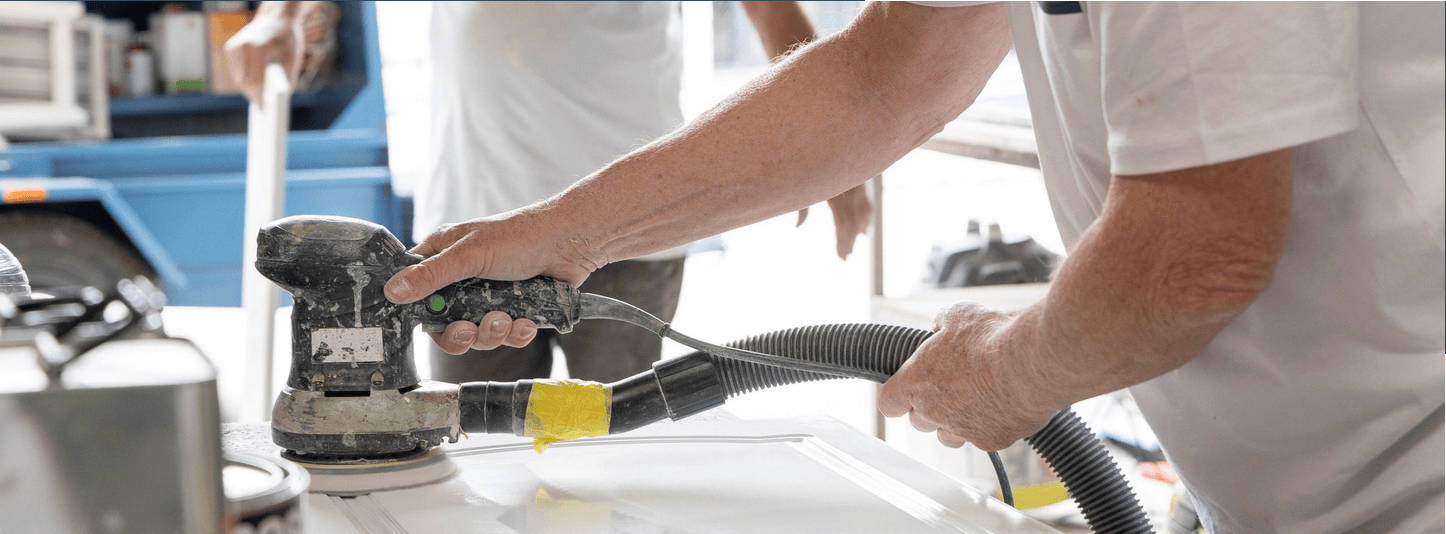
- Glossy or very smooth surfaces are sanded or mechanically abraded to create a key for the new finish.
No coating sticks properly to a dirty, shiny, or flaky surface. A thorough prep phase can take time, but it is what separates a professional result from a quick spray that fails early.
3. Repairs And Levelling
Before the new surface goes on, small defects are dealt with.
- Chips, dents, or minor edge damage are filled with suitable repair compounds.
- Swollen areas that are still structurally stable may be trimmed or reshaped.
- Loose edging strips are removed or resecured where possible.
The aim is to create an even base so the final finish looks smooth and consistent. In some laundry benchtop resurfacing projects, you can also reshape slightly rounded or chipped corners so they look neater.
4. Primers And Adhesion Coats
Once the base is ready, a primer or adhesion coat is applied. The exact product depends on what is being resurfaced.
- Specialised primers that bond to laminates, melamine, or similar board materials.
- Alternative primers for timber or previously painted surfaces.
Primers are chosen to grip both the existing surface and the topcoat that will follow. Without this step, even the best topcoat can peel or chip too easily under laundry use.
5. Applying The New Finish
This is the visible part that changes how your laundry looks. Depending on your goals and budget, a resurfacing specialist may recommend one or more of the following finish types.
- High performance coatings for benchtops, often in a smooth or stone look effect.
- Spray painted finishes for cupboards and doors, using cabinet grade coatings designed for regular cleaning.
- Vinyl wraps or foils for certain cabinet doors, where a wrap is heat applied and trimmed to fit.
These finishes are usually sprayed on or carefully applied in multiple layers, with controlled drying time between coats. This is how you achieve an even, professional look instead of visible brush marks or patchy colour.
6. Curing And Reassembly
After the final coat, the new surface needs time to cure properly. This is different from just feeling dry to the touch.
- Doors and drawers are reinstalled once coatings have set enough to handle.
- Silicone is reapplied around sinks and benchtop joins if required.
- You receive clear instructions on when you can start using the laundry as normal.
Good resurfacing companies will explain realistic curing times for each product they use. Shortcuts at this stage risk dents, marks, or premature wear, especially in a wet area like a laundry.
Typical Materials Used In Laundry Resurfacing
Different surfaces call for different products. A Perth laundry resurfacing specialist will usually recommend from a core group of materials that work well in wet, high use spaces.
- Specialist cabinet paints and coatings designed for doors and panels, with strong adhesion and good resistance to cleaning.
- Benchtop resurfacing systems, often multi coat, that mimic stone or give a solid colour finish, with a top clear coat for extra durability.
- Vinyl foils or wraps for certain cupboard doors, where a uniform colour or woodgrain look is wanted at a specific price point.
- Protective topcoats, such as clear sealers, that sit over colour coats on benchtops to help resist moisture and light abrasion.
Not every material suits every laundry. The right choice depends on how you use the space, how much cleaning it will get, and your tolerance for wear over time. If you want to see how similar coatings perform in kitchens, you can review our broader kitchen resurfacing information for Perth homes.
How Resurfacing Differs From Full Replacement
It helps to be clear on what resurfacing is not.
Resurfacing does not change your basic layout. Your sink stays in the same spot, the cupboards keep the same shape, and plumbing and electrical work stay as they are. Replacement, on the other hand, often involves new cabinets, new benchtops, and sometimes new services.
Resurfacing keeps the existing carcasses. Replacement means ordering brand new cabinets, which then have to be installed, levelled, and fixed to walls and floors. That takes more time and usually more trades.
Resurfacing focuses on finish and light repairs. It is about repairing minor damage, preparing, then applying new finishes. If your cabinets are rotting, badly warped, or structurally failing, resurfacing is not the right solution and replacement becomes necessary.
From a practical point of view, the differences affect three key areas that matter to Perth property owners.
- Aesthetics, resurfacing delivers a fresh, modern look by updating colour and finish. You can achieve smooth whites, soft neutrals, or stone effect benchtops without removing cabinets.
- Durability, good quality coatings and materials are designed to withstand regular laundry use, provided the underlying structure is sound and you follow the recommended care instructions.
- Cost and disruption, resurfacing typically involves fewer trades, less demolition, and shorter project times compared with full replacement.
Why Resurfacing Works Well In Laundries
Laundries in Perth often have cabinetry that is still solid, even when the finish has clearly aged. That makes them ideal candidates for resurfacing.
- Aesthetics. You can bring the look of the laundry into line with an updated kitchen or bathroom without matching the full spend of those rooms.
- Durability. Purpose made coatings and benchtop products used by experienced resurfacing specialists are formulated for wet areas and regular cleaning, which suits the way laundries are used.
- Cost. Because you are not paying for new cabinets, benchtops, demolition, and full install, resurfacing usually sits at a more accessible price point, especially if you are upgrading several areas at once.
Many Perth homeowners use laundry resurfacing as part of a staged plan. For instance, they might resurface the kitchen first, refresh the laundry to match, then address bathrooms with a similar process. If you are exploring this sort of whole home approach, resources like our Perth resurfacing specialists hub can help you see how laundries fit into the broader picture.
The key idea is simple. If your laundry cabinets and benchtops still function, resurfacing lets you redirect your budget from ripping things out to finishing them properly, so the room looks fresh, works well, and supports how you actually live in your Perth home in 2026.
Advantages Of Resurfacing Laundry Benchtops And Cupboards
Once you understand what laundry resurfacing is, the next question is simple. Why choose it over full replacement? In Perth, the advantages tend to fall into a few clear categories, especially for busy households and commercial properties that cannot afford long downtime.
1. Cost Savings Compared With Replacement
The most obvious benefit is cost. When you resurface, you work with what you already have. The cabinet carcasses stay, the plumbing stays, and the layout stays. You are paying for skilled preparation and quality finishes, not for new cabinetry, benchtops, and extensive demolition.
With full replacement, costs can quickly stack up.
- Cabinet supply and install
- New benchtops cut and fitted
- Plumbing and possibly electrical changes
- Removal and disposal of old materials
- Extra trades to repair walls, tiling, or flooring disturbed by the rip out
Resurfacing reduces or removes many of those line items. You invest in:
- Professional surface preparation
- Repairs to chips and minor damage
- Application of hard wearing coatings or wraps
You are directing your budget into the visible finish instead of rebuilding the whole room.
For Perth homeowners, this often means you can refresh the laundry and still have funds available for more intensive work elsewhere, such as a bathroom or outdoor area. For commercial managers, it allows you to plan upgrades across more units or facilities within the same overall spend.
If you want a broader view of how resurfacing stacks up against replacement in other rooms, resources such as our benchtop resurfacing guide for Perth can help you compare approaches.
2. Faster Project Timelines
Time matters, especially when the laundry is in daily use. Full replacement usually involves:
- Lead time for cabinet manufacture and benchtop cutting
- Coordinating multiple trades across different days
- Waiting for new work to be checked and adjusted
During that period, the laundry can be partly or completely out of action. That is inconvenient in a home and even more disruptive in a commercial setting where tenants or staff rely on the space.
Resurfacing compresses the program into a tighter window.
- No need to wait for custom cabinetry fabrication when you keep the existing carcasses.
- Most of the work is prep and coating, which can be sequenced efficiently.
- You get a clear schedule from the resurfacing team, including when each stage happens and when you can use the room again.
For many Perth projects, the practical result is simple. Your laundry is out of normal use for a much shorter time compared with a full fitout. You might rearrange washing for a few days rather than finding long term workarounds.
Less waiting, less juggling, less impact on daily routines.
3. Less Mess And Disruption In Your Property
Renovation fatigue is real. Dust, debris, and trades coming in and out can wear thin quickly, especially in smaller homes, apartments, or busy commercial sites.
Full replacement of a laundry often means:
- Cabinets and benchtops being cut out and dragged through the property
- Dust from cutting, drilling, and fixing new components
- Noise from tools over several days
- Possible patching of walls and floors once old units are removed
Resurfacing reduces disruption because the structure stays in place. The process typically involves:
- Protective sheeting and masking of surrounding areas
- Localised sanding and preparation focused on the surfaces only
- Controlled spraying or application of coatings
- Limited need to cut or remove bulky items through the home
You still need to clear benchtops and cupboards before work starts, but you avoid the heavy demolition and rebuild stages that create most of the mess.
For commercial properties, this lower disruption can be the difference between approving the project or shelving it. Less noise and dust mean fewer complaints from tenants, guests, or staff and fewer risks around safety and access.
4. Environmentally Friendly By Reducing Waste
Resurfacing aligns well with more sustainable choices, which many Perth property owners now factor into their decisions.
When you rip out an entire laundry, large volumes of material usually end up as waste.
- Cabinet carcasses and doors
- Laminate or other benchtop materials
- Old fixings, edging, and adhesives
Most of this cannot be easily recycled, so it goes to landfill. Replacement also involves new manufacturing, packaging, and transport for all the new products.
Resurfacing works differently.
- You retain the main structure, so carcasses and benchtops stay out of the waste stream.
- You use targeted materials, coatings and wraps are applied directly to existing surfaces rather than replacing entire components.
- You may avoid knock on works, such as replacing tiles, patching walls, or renewing flooring that full demolition would disturb.
This does not make resurfacing completely waste free, but it typically reduces the volume you send to landfill compared with a full rip out and replacement.
For commercial operators, this can support internal sustainability goals and reporting. For homeowners, it can simply feel better to improve what you already have rather than throwing it out while it still functions.
5. Customising Finishes To Suit Your Style
Modern resurfacing products give you a wide range of finish options so your laundry does not need to feel like an afterthought. You can bring it into line with the rest of your home or create a simple, neutral backdrop that suits any future changes.
Common choices include:
- Smooth solid colours for cupboard doors and panels, such as fresh whites, soft greys, or warm neutrals.
- Stone look or textured benchtop finishes that mimic the appearance of higher end materials at a more accessible price point.
- Low sheen or satin finishes that hide fingerprints and are easy to clean.
A good resurfacing specialist will help you choose finishes that do three things.
- Match or complement existing areas. For instance, if your kitchen cabinets are being resurfaced in a certain colour, you can specify the same or a coordinated tone for the laundry so the home feels consistent.
- Suit how you use the space. High gloss looks sharp in photos but can highlight marks. Satin or low sheen finishes often work better in busy laundries.
- Support your plans for the property. If you might sell in a shorter timeframe, simple, neutral colours often appeal to a broader group of buyers or tenants.
For Perth homeowners keen to line their laundry up with current styles, our guide to 2026 resurfacing styles for Perth kitchens gives a sense of colours and finishes that also translate well into laundry spaces.
You are not stuck with whatever the builder installed years ago. Resurfacing lets you make design choices based on how you live now, rather than when the home was first built.
6. A Practical Balance Of Appearance, Durability, And Budget
When you put all these advantages together, a clear pattern appears. Laundry resurfacing offers a practical middle ground between doing nothing and paying for a full renovation.
- Cost, you keep structural elements and focus spending on finishes, which usually brings the total project out below a full replacement.
- Time, shorter project windows and faster return to normal use make it easier to fit around daily life or business operations.
- Disruption, less demolition and fewer trades reduce stress and mess inside the property.
- Waste, reusing existing cabinets and benchtops cuts down on material going to landfill.
- Style, modern coatings and wraps let you choose colours and textures that actually suit your taste and the rest of your home.
For many Perth properties, that balance is exactly what is needed. The laundry works fine, it just looks dated. Resurfacing gives you a way to fix that without committing to a full rebuild, long downtime, or a level of spend that does not match the importance of the room.
The key advantage is choice. With laundry resurfacing, you can sequence work, set a realistic budget, and still achieve a clean, modern finish that carries a professional warranty on workmanship and materials where applicable.
From here, the next step is to compare resurfacing with full replacement in more detail, so you can see which option lines up best with your plans for your Perth laundry.
Comparing Laundry Resurfacing Vs Replacement In Perth
Once you know what laundry resurfacing involves, the next step is to weigh it up against full replacement. Both paths can work well in Perth homes and commercial properties. The right choice depends on cost, time, how long you plan to stay, and how much disruption you can live with.
This section gives you a clear, side by side comparison so you can make a confident call for your own laundry benchtops and cupboards.
Resurfacing Vs Replacement At A Glance
Here is a simple way to think about the two options.
- Laundry resurfacing keeps your existing cabinets and benchtops, repairs minor defects, then applies new finishes so the room looks refreshed.
- Laundry replacement removes the old cabinets and benchtops, installs brand new units, and often involves extra trades such as plumbing and electrical.
Both can deliver a smart looking laundry. The difference is how you get there, what you spend, and how much your day to day routine is affected along the way.
1. Cost Comparison
Cost is usually the first question. Perth property owners want to know where their money is going and what kind of result they can expect at each spend level.
Where The Money Goes With Resurfacing
With laundry resurfacing, most of your budget goes into:
- Thorough cleaning and surface preparation
- Repairs to chips, minor swelling, and worn edges
- Primers and adhesion coats to grip the existing surface
- High performance coatings or wraps for benchtops and cupboards
- Labour for careful masking, spraying, and finishing
You are not paying for new cabinets, new benchtops, or structural changes. You are upgrading the finish on what you already have so it looks modern and is easier to keep clean.
Where The Money Goes With Replacement
With full replacement, the cost base is broader. Typical line items include:
- New cabinet carcasses and doors
- New benchtops cut and fitted
- Demolition and disposal of old units
- Plumbing adjustments and reconnection of the trough
- Electrical work if appliances, power points, or lighting move
- Patching and repainting walls or tiling affected by the rip out
Each of these involves materials and labour. That is why replacement usually sits in a higher price band than resurfacing, especially once you factor in multiple trades and follow up work.
In practical terms, resurfacing focuses your budget on the visible finish, while replacement spreads it across structure, services, and finishes.
2. Timeframes And Project Length
Time is just as important as money, especially when you rely on the laundry every day or you manage a commercial site with narrow shutdown windows.
How Long Resurfacing Typically Takes
With resurfacing, you avoid cabinet manufacturing lead times and most of the demolition work. A typical resurfacing project for a standard Perth laundry usually involves:
- Preparation and repairs carried out on site
- Application of primers and multiple coats of finish
- A curing period before full, heavy use resumes
The active work itself fits into a relatively short window, then you plan around the stated curing times from your resurfacing specialist. During curing, you may be asked to treat surfaces gently and avoid standing water or heavy impacts.
How Long Replacement Typically Takes
Replacement introduces several extra stages.
- Measure and design of a new layout or like for like replacement
- Manufacture of cabinets and benchtops
- Coordinating delivery and installation dates
- Booking plumbers, electricians, and any tilers or painters needed
Once installation starts, the laundry is normally out of action until cabinets, benchtops, trough, and services are all back in place and tested. That can mean a longer period without a functional space.
For busy Perth households and commercial properties, the shorter active time on site for resurfacing can be a major advantage. You deal with a single team, a set schedule, and usually a faster return to normal use.
3. Longevity And Performance
A common concern is whether resurfacing will last as well as replacement. The honest answer is that it depends on the condition of your existing structure, the products used, and the way you care for the surfaces after the job.
Longevity With Resurfacing
When carried out professionally, with good preparation and suitable coatings, resurfaced benchtops and cupboards in a laundry can offer reliable service for an extended period. A few key points matter.
- Sound structure. If cabinet carcasses and benchtops are solid and stable, resurfacing has a firm base. If the substrate moves or swells, it can affect the finish over time.
- Laundry friendly products. Coatings should be chosen for wet areas, regular cleaning, and light impacts from baskets, bottles, and everyday use.
- Care and maintenance. Using gentle cleaners, avoiding harsh abrasives, and wiping spills fairly quickly all help extend the life of the finish.
Many professional resurfacing companies provide a workmanship and materials warranty on their work, often around the 2 year mark for residential projects where applicable, which gives you added reassurance for the early period after installation.
Longevity With Replacement
New cabinets and benchtops, installed correctly, should also deliver a long service life. The difference is that you start with brand new materials throughout.
- Fresh carcasses without prior swelling or damage
- Benchtops supplied to current standards for moisture resistance
- New hinges, runners, and hardware
If you have significant water damage or structural issues now, replacement may give you a longer term solution, especially if the room has had ongoing leaks or heavy wear.
A useful way to think about it is this.
- If your laundry cabinets and benchtops are structurally sound and your main issue is appearance, resurfacing often delivers good longevity for the money spent.
- If the structure is failing, sagging, or heavily swollen, replacement is the safer choice for long term performance.
4. Disruption To Home Or Business Operations
For many Perth clients, disruption is the deciding factor. You might be willing to spend more if it avoids weeks of mess, or you might prefer a lighter project that fits around other work in the property.
Disruption With Resurfacing
Resurfacing aims to contain noise, dust, and access issues.
- Most works happen within the laundry footprint, not across the whole property.
- Protective sheeting helps shield nearby rooms and walkways.
- You leave appliances mostly in place, with some repositioning where needed for access.
You will need to empty cupboards and clear benchtops before work starts, but walls, flooring, and adjacent rooms are usually left untouched. For many Perth homes, that makes the project far less stressful, especially if you have children, pets, or work from home.
In commercial settings, the smaller footprint and fewer trades on site reduce the impact on residents or staff. You can often stage laundries in a building in sequence rather than take them all out of action at once.
Disruption With Replacement
Replacement involves more trades and more movement through the property.
- Old cabinets and benchtops are cut out and removed through hallways and lifts.
- New units are carried in, unpacked, and assembled.
- Plumbers and electricians complete their own tasks, sometimes on different days.
The result can be more noise, more dust, and more people coming and going. In homes with limited access or multi level townhouses, this can feel intrusive. In commercial buildings, it can clash with peak periods, visitor access, or care routines.
If you value a low stress process with minimal footprint, resurfacing usually has the edge on disruption.
5. Impact On Property Value And Presentation
Many Perth owners are thinking about resale or rental appeal when they look at upgrading a laundry. The question becomes, does resurfacing do enough, or do you need full replacement to support property value.
How Resurfacing Affects Perceived Value
A clean, modern looking laundry makes a strong impression, especially when buyers or tenants are comparing several properties.
- Fresh colours and finishes help the space feel updated and well cared for.
- Matching finishes with your kitchen and bathroom creates a sense of flow.
- Neat, easy to clean surfaces photograph well for listings.
Because resurfacing is usually less expensive than replacement, it can offer strong visual impact per dollar spent. This suits owners who want to tidy the property for sale or lease without committing to a full renovation.
How Replacement Affects Perceived Value
Full replacement can also support value, especially where the old laundry had serious functional issues.
- A new layout that improves storage or appliance placement
- A deeper benchtop or better integration with adjacent areas
- Brand new fittings that align with a complete renovation elsewhere in the home
If you are doing a full renovation of the entire property at once, and the laundry is part of that plan, matching brand new cabinetry across all wet areas can make sense.
For many typical Perth homes however, a well resurfaced laundry already removes a potential negative during inspections. It looks tidy, modern, and consistent with the rest of the home, which is often enough to support a good impression without the extra spend on replacement.
6. When Resurfacing Is The Better Choice
Resurfacing usually works best in these situations.
- The structure is sound. Cabinets and benchtops are stable, with only light to moderate surface wear.
- The layout is fine. You are happy with the current positions of cupboards, trough, and appliances.
- Your main issue is appearance. Colours, patterns, or finishes are dated, chipped, or stained, but still functional.
- You want to control cost and disruption. You prefer a shorter project and less mess through the home or building.
- You are working to a staged plan. You might be resurfacing the kitchen and laundry together to keep costs and finishes consistent.
If you are in this group, it is worth speaking to a resurfacing specialist and getting a clear assessment of what can be done on your existing surfaces. Resources like our laundry resurfacing advice for Perth homeowners can also help you think through priorities.
7. When Replacement Makes More Sense
On the other hand, replacement is usually the better option when you see warning signs such as:
- Severe water damage. Cabinet carcasses are swollen, crumbly, or mould affected.
- Structural movement. Benchtops are sagging, or cupboards are pulling away from walls.
- Major layout issues. You want to move the trough, change appliance positions, or reconfigure storage completely.
- Non compliant or very old services. Plumbing or electrical work needs upgrading for safety or code reasons.
In these cases, resurfacing would be a short term fix on top of a failing base. It makes more sense to address the structure properly with new cabinetry and coordinated trade work, then consider finishing touches such as paint and flooring as part of a complete plan.
8. How To Decide For Your Perth Laundry
If you are still on the fence, use this simple decision checklist as a starting point.
- Inspect the structure. Open cupboards, check under the trough, and look for soft spots, sagging shelves, or major swelling. If you find these issues, lean toward replacement or at least partial rebuild.
- Clarify your timeframe. Are you planning to stay long term, sell soon, or hold as a rental. Shorter timeframes often suit resurfacing, while major long term layout changes point to replacement.
- Set a realistic budget. Decide what you are comfortable investing in the laundry compared with other areas. If the laundry is lower on the priority list, resurfacing can give you a strong visual lift without taking funds from more important rooms.
- Consider disruption. Think about how many days you can manage without the laundry, and how much noise and mess is acceptable in your home or building.
- Get professional input. A resurfacing specialist can tell you quickly whether your current surfaces are suitable. A cabinet maker or builder can advise if structural work is needed.
For many Perth properties, the answer ends up being a mix. Replacement where structure has failed, and resurfacing where cabinets are still solid but dated. That blended approach can keep costs manageable while still delivering a laundry that looks clean, modern, and aligned with the rest of your surfaces.
The key is to choose the option that fits your structure, budget, and plans, rather than feeling pushed into a full renovation when a quality resurfacing job would have done the job just as well.
Materials And Finishes Popular For Laundry Resurfacing In Perth
Once you have decided that resurfacing your laundry makes sense, the next decision is what to resurface it with. The products you choose will affect how your benchtops and cupboards look, how they cope with Perth conditions, and how easy they are to keep clean over time.
This section walks through the main materials and finishes used in laundry resurfacing in Perth, what they do well, where they struggle, and how to match them to the way you actually use your space.
Main Finish Types For Laundry Benchtops And Cupboards
Most laundry resurfacing projects use a mix of the following.
- High performance spray painted coatings for cupboard doors and panels
- Specialist benchtop resurfacing systems, often with a solid or stone look finish
- Laminates, as new benchtop or panel sheets in partial replace and resurface projects
- Vinyl foils or wraps for selected cabinet doors and end panels
- Protective clear coats and sealers over colour coats in wet or high use zones
Each option has its own strengths. In many Perth laundries you will see a combination, such as a benchtop resurfacing system on the counter and a cabinet grade spray finish on the cupboards.
Spray Painted Cabinet Finishes
Spray finishing is one of the most common methods for laundry cupboards and cabinet doors. Instead of replacing doors, a specialist prepares the existing surfaces and sprays them with high quality, cabinet grade coatings.
How It Works
The typical process involves:
- Cleaning and de-greasing all surfaces
- Sanding or abrading to give the coating something to grip
- Filling chips, small dents, or screw holes
- Applying adhesion primers suited to laminate, melamine, or timber
- Spraying multiple coats of a hard wearing cabinet coating in your chosen colour and sheen level
These coatings are purpose made for kitchens and laundries. They are different to ordinary interior wall paint, which is not designed to handle constant touching, cleaning, and moisture.
Pros Of Spray Painted Cabinet Finishes
- Wide colour choice. You can match nearby rooms, appliances, or current trends, which is handy if you want the laundry to tie in with a resurfaced kitchen. For more on whole home colour planning, you can refer to our 2026 kitchen resurfacing trends guide for Perth.
- Professional, even look. Spraying gives a smoother finish than brushing or rolling, which is noticeable on large flat cupboard doors.
- Good durability for cupboards. Quality cabinet coatings tolerate frequent wiping and regular use when applied over good preparation.
- Sheen options. Satin and low sheen finishes usually suit laundries, reducing glare and fingerprints compared with high gloss.
Cons Of Spray Painted Cabinet Finishes
- Preparation heavy. If prep is rushed or skipped, the best coating will still chip or peel. You need a team that takes this stage seriously.
- Impact sensitive at edges. Sharp impacts on corners or edges can chip the coating. This is manageable day to day but worth noting if you often knock baskets into cupboards.
- Curing time. The coating needs time to harden properly. Doors may feel dry quite quickly but remain more vulnerable to marks until fully cured.
Good for. Most laundry cupboard doors, drawer fronts, panels, and overheads that are structurally sound but dated.
Benchtop Resurfacing Systems
Benchtops need a tougher surface than most cupboard fronts. In a laundry they handle water, detergents, baskets, ironing, and general wear. Specialist benchtop resurfacing systems are used to refinish these surfaces.
What They Are
Benchtop resurfacing systems are multi layer coating systems designed for horizontal surfaces. They usually include:
- A primer that bonds to laminate or similar substrates
- One or more colour or texture coats, either solid or stone look
- A clear protective topcoat to improve resistance to moisture and light abrasion
The exact chemistry varies between products, but the goal is the same. To give you a smooth, attractive surface that behaves more like a benchtop than a wall.
Pros Of Benchtop Resurfacing Systems
- No need to remove the benchtop. You avoid cutting out and replacing the whole slab where the structure is still sound.
- Stone look options. Many systems offer a mottled or speckled finish that mimics natural stone at a more accessible cost.
- Seamless colour runs. You can often hide old joins and patchwork areas better than with basic patch repairs.
- Suitable for laundries. Products are chosen for moisture tolerance and ease of cleaning.
Cons Of Benchtop Resurfacing Systems
- Heat sensitivity. Most systems do not like direct heat from irons, hot pans, or appliances. You need to use boards or trivets rather than placing hot items straight on the surface.
- Abrasion limits. They are tough enough for typical laundry use but not designed for cutting directly on the surface or heavy impact from tools.
- Visible substrate movement. If the underlying benchtop flexes or swells over time, hairline cracks or edge wear can appear.
Good for. Laundries where the benchtop is stable and you want a fresh, modern surface without replacing the entire top. If you would like to see how similar systems are used in kitchens, our guide to benchtop resurfacing for Perth homeowners is useful background.
Laminates As Part Of A Resurfacing Plan
Laminates are still a practical choice for laundries in Perth, especially where part of the benchtop or a panel needs replacement rather than coating. While laminate is usually a replacement material, it often works alongside resurfacing, not instead of it.
How Laminates Are Used
- As new benchtops where the old one is beyond repair but the cabinets will stay
- As new end panels or infill pieces to tidy awkward gaps
- As replacement doors if a few are too damaged to recoat
The rest of the laundry, such as other cupboard doors or remaining benchtops, can then be resurfaced to match or complement the laminate choice.
Pros Of Laminates
- Proven performance. Laminate has a long track record in wet areas when installed and sealed properly.
- Wide colour and pattern range. From simple solids to detailed stone look prints.
- Cost effective replacement. Generally more affordable than many natural or engineered stone products.
Cons Of Laminates
- Join lines and edging. Visible edges and joins can be prone to chipping or swelling if water gets in over time.
- Less flexible once fitted. Unlike coatings, you cannot easily adjust colour or sheen after installation without resurfacing again.
- More invasive work. Installing new laminate benchtops requires removal of the existing top, which is more disruptive than coating an existing surface.
Good for. Situations where some components must be replaced, such as a badly swollen benchtop, and you then want to resurface surrounding cupboards and panels to create a consistent, updated look.
Vinyl Foils And Wraps On Cupboards
Vinyl foils and wraps give another option for refreshing cupboard doors and sometimes panels. A thin vinyl film is applied to the surface, often with heat and pressure, then trimmed neatly around edges and cutouts.
Pros Of Vinyl Foils And Wraps
- Consistent colour and finish. Manufactured film can deliver a uniform appearance across multiple doors.
- Texture options. Some foils mimic timber grain or textured finishes that paint alone does not easily reproduce.
- Factory or site application. Depending on the service, doors can be wrapped off site, which reduces time on site for that stage.
Cons Of Vinyl Foils And Wraps
- Edge and corner vulnerability. Over time, edges may be more prone to lifting or damage if bumped or exposed to moisture repeatedly.
- Heat sensitivity. Vinyl does not like direct heat. While laundries are usually cooler than kitchens, heat from dryers or direct sun through a window can affect some products.
- Substrate limits. Very routed or highly profiled doors may be harder to wrap cleanly, depending on the system.
Good for. Simple, flat or lightly profiled cabinet doors where you want a particular texture or finish and your resurfacing specialist confirms a suitable wrap product is available.
Epoxy And High Build Coatings
Epoxy style and other high build coatings can appear in some laundry resurfacing systems, especially on benchtops. They are known for their hardness and, when formulated correctly, moisture resistance.
Pros Of Epoxy Style Coatings
- Strong, seamless film. Provides a continuous surface without grout lines or joins.
- Good chemical resistance. Handles many household cleaners and detergents well when cured properly.
- Thickness. High build can help even out minor texture differences on the substrate.
Cons Of Epoxy Style Coatings
- Application sensitive. Mix ratios, pot life, and environmental conditions need careful control for best results.
- UV sensitivity in some types. Certain epoxies can yellow over time with strong sunlight exposure, which is relevant for laundries with large windows.
- Repair appearance. Spot repairs can be more visible than with thinner systems if damage occurs later.
Good for. Selected benchtops or panels where a thicker, more chemical resistant finish is desired and a specialist confirms suitability for your exact conditions.
Clear Topcoats And Sealers
Many laundry resurfacing systems finish with a clear sealer or topcoat. This is particularly common on benchtops and sometimes on doors in very high use settings.
Why Topcoats Matter
- Extra moisture resistance. Helps protect colour coats underneath from water and detergents.
- Improved cleanability. Gives a smoother, less porous surface that wipes down more easily.
- Sheen control. Lets you choose a matt, satin, or gloss effect independent of the colour layer.
What To Watch For
- Curing time. Topcoats often need a defined period before they reach full hardness. Early heavy use can mark or dull the surface.
- Compatibility. The topcoat must suit the colour system below. Mixing random products increases the risk of peeling or soft finishes.
- Care requirements. Aggressive scouring pads and harsh chemicals can still damage a clear coat, so you need simple care guidelines and to follow them.
Good for. Any resurfaced benchtop and selected cupboard areas that will see frequent cleaning or splashes.
Choosing The Right Combination For Your Laundry
Most Perth laundries do not rely on a single material. Instead, you and your resurfacing specialist choose a combination that fits your structure, budget, and usage. A simple framework can help.
1. Match Materials To Each Surface
- Benchtops. Prioritise durability and moisture resistance. Look at benchtop resurfacing systems or, where needed, new laminate tops paired with coatings on other surfaces.
- Cupboard doors and panels. Prioritise appearance and cleanability. Cabinet grade spray finishes are often the best mix of look, cost, and maintenance.
- End panels, filler pieces, and trims. Use the same system as doors where possible for a consistent look, or match new laminate or vinyl where replacement pieces are unavoidable.
2. Think About How You Use The Laundry
- If you iron directly on the benchtop, or rest hot appliances there, consider a separate ironing surface or board so you do not stress any coating.
- If you run a busy family home, low sheen finishes that hide minor marks and clean quickly often make more sense than high gloss.
- If your laundry gets strong sun, ask about UV stability for any benchtop or cupboard coatings, especially lighter colours.
3. Balance Appearance, Maintenance, And Budget
You can use a simple checklist to narrow your options.
- Appearance priority high. Discuss premium cabinet coatings and more detailed benchtop finishes. Accept a little more spend and care for a sharper look.
- Maintenance priority high. Choose mid sheen, forgiving finishes and robust benchtop systems that clean easily, even if the look is more understated.
- Budget priority high. Focus resurfacing on the most visible areas such as benchtops and door fronts, and keep colour choices simple to stay within your spending comfort.
If you are planning to coordinate multiple rooms, such as kitchen, bathroom, and laundry, you can explore our bathroom resurfacing guide for Perth to see how similar materials perform across wet areas, then choose a palette and product mix that works everywhere.
The key is to treat materials and finishes as tools. When they are matched carefully to each surface and to the way you use your laundry, you get a finish that looks right, wears well, and is realistic to maintain in a busy Perth home or commercial setting.
The Laundry Resurfacing Process Explained
Knowing what actually happens during laundry resurfacing makes it much easier to plan around the work and choose the right provider. This section walks through a typical process for Perth homes and commercial properties, from first inspection through to the final cure, so you know exactly what to expect.
Step 1: Initial Assessment And Quote
The process starts with a site visit or detailed photos and measurements. A professional should look at more than just colours. They are checking whether your laundry is suitable for resurfacing at all.
- Cabinet structure, are the carcasses solid, or are there signs of rot, sagging, or major swelling.
- Benchtop condition, particularly around the trough, joins, and any cutouts.
- Existing finishes, laminate, melamine, timber, painted surfaces, or a mix.
- Moisture and ventilation, any ongoing leaks, persistent damp, or poor airflow that could affect durability.
If the structure is sound, they will talk through:
- Which areas you want resurfaced, benchtops, doors, drawer fronts, overheads, side panels.
- Preferred colours and finishes, solid colours, stone look benchtops, satin or low sheen cupboards.
- Any small layout tweaks that might be included, such as replacing a single damaged door or adding a filler panel.
You should receive a clear, written quote that spells out:
- Exactly what is included, and excluded.
- Which products or systems will be used on benchtops and cupboards.
- Indicative schedule and how long each stage is expected to take.
- Warranty terms, for many residential resurfacing projects this may include a workmanship and materials warranty of around 2 years where applicable.
A thorough assessment up front avoids surprises later.
Step 2: Booking, Colour Selection, And Prep Instructions
Once you accept the quote, the next step is to lock in dates and confirm your finish choices.
- Colour consultation. You choose colours for cupboards and benchtops, often using physical samples or a standard colour deck. Many Perth clients keep laundries neutral so they work with future changes, or match the finish to an existing kitchen. If you are resurfacing multiple rooms, resources like our kitchen resurfacing style guide can help you keep a consistent look.
- Finish type. You decide on sheen level, such as matt, satin, or semi gloss, and the type of benchtop system that best suits your use.
- Scheduling. The contractor confirms start date, estimated on site time, and any curing periods where you will need to treat surfaces gently.
They should also give you simple instructions to get the room ready.
- Clear benchtops, including detergent bottles, baskets, and small appliances.
- Empty cupboards and drawers that will be resurfaced.
- Provide access to power and water.
- Organise pets and children away from the work area.
Good preparation by you keeps the project moving and reduces time on site.
Step 3: Site Protection And Set Up
On day one, a professional team will start by protecting your property before they touch any coatings.
- Masking and sheeting. Floors, adjacent walls, appliances, and nearby furniture are covered with drop sheets and tape to protect from dust and overspray.
- Ventilation set up. Where needed, fans, extraction, and open windows help manage fumes and speed up drying. Many modern coatings are low odour, but ventilation is still important.
- Hardware removal. Handles, knobs, and sometimes doors are removed so surfaces can be coated cleanly. In some cases, doors are taken to a spray area while frames are done in situ.
This stage is a good early indicator of professionalism. Careful masking and methodical set up show that the team takes both your home and the finish quality seriously.
Step 4: Deep Cleaning And Degreasing
Laundries might not look greasy like kitchens, but detergents, softener residue, hand creams, and general grime still build up. Coatings will not bond properly over this, so thorough cleaning is essential.
- Surfaces are wiped with specialist cleaners or degreasers to remove oils, residues, and silicones.
- Silicone around the trough, splashbacks, or benchtop joins is cut out wherever it would interfere with coatings.
- Dust and loose debris are vacuumed away.
No short cuts here. If a provider rushes cleaning, it will show later as peeling, fisheyes, or poor adhesion, especially around sinks and high touch areas.
Step 5: Sanding, Abrasion, And Surface Keying
After cleaning, the next goal is to give new coatings something to grip. Glossy laminates and melamine finishes are too smooth on their own, so they are abraded.
- Mechanical sanding with suitable grits to break the gloss and roughen the surface slightly.
- Hand sanding in corners, profiles, and around edges that machines cannot reach.
- Dust removal with vacuuming and tack cloths so no fine dust remains to contaminate the primer.
This stage can look dramatic as old shine disappears, but it is a controlled process. The aim is not to remove all the old finish, rather to create a consistent, keyed surface for primers.
Step 6: Repairs To Chips, Swelling, And Imperfections
Once surfaces are keyed, defects become very visible, which is useful. The team now addresses minor damage before any new finish goes on.
- Filling chips, dings, and screw holes with appropriate fillers or repair compounds.
- Trimming and stabilising swollen edges on benchtops and doors where the core is still structurally sound.
- Reinforcing loose edging or replacing localised pieces that are beyond repair.
- Levelling small dips or joins where they would telegraph through the new finish.
Repairs are then sanded smooth and blended so they do not stand out once the topcoat is applied. In some cases, individual components that are too far gone, such as a single badly water damaged door, may be replaced and then coated to match the rest.
Step 7: Primers And Adhesion Coats
With a clean, repaired substrate ready, primers are applied. This is one of the most important technical stages.
- Substrate specific primers are chosen to bond to laminates, melamine, timber, or previously painted surfaces.
- Coverage is complete, including edges, cutouts, and under returns, to avoid weak points.
- Drying time is respected, so the primer cures properly before topcoats go on.
The right primer creates a bridge between your old surface and the new finish. If the primer fails, everything on top is at risk, so experienced installers are careful with product choice and application conditions, including temperature and humidity.
Step 8: Applying The New Benchtop Finish
Benchtops are usually tackled first, as they take more wear and often have different coating systems from cupboards.
- Base or colour coat is sprayed or rolled, giving the main colour or stone effect background.
- Texture or feature layers are added where a stone look system is used, often with subtle flecks or patterns.
- Clear protective topcoat is applied to seal the surface and improve resistance to moisture and day to day abrasion.
Each coat is applied within a specific time window and at the correct thickness. Too thin, and durability suffers. Too thick, and you risk runs or slow curing. Skilled installers keep a close eye on lighting, technique, and drying times between coats.
At this point, the benchtop will start to look finished, but it is not ready for heavy use yet. Curing continues in the background while other areas are completed.
Step 9: Applying The New Cupboard And Panel Finish
With benchtops underway or protected, cupboard doors, drawer fronts, and panels are resurfaced.
- Cabinet grade coatings are sprayed in your chosen colour and sheen. Some systems use a separate colour and clear coat, others combine colour and protection in one product.
- Multiple light coats are preferred over one heavy coat, to avoid runs and ensure even coverage around profiles and edges.
- Frames and fixed panels are done in situ, while removable doors may be sprayed on racks or trestles for full access.
The goal is an even, factory like appearance, not a patchy or brush marked look. Good lighting and consistent spray technique are important for a smooth result.
Step 10: Detail Work, Touch Ups, And Reassembly
Once coatings have reached handling strength, the team moves into the detail phase.
- Handles and hardware reinstalled, or new handles fitted if you have chosen to update them as part of the project.
- Doors and drawers rehung and aligned so gaps are even and everything opens and closes smoothly.
- Silicone reapplied around troughs, benchtop joins, and along splashbacks where required, using neat, straight beads.
- Edges and corners checked for any thin spots or small defects and touched up carefully.
Masking tape and sheeting are removed at this stage, and the room is cleaned down so you can see the new finish clearly.
Step 11: Curing Time And First Use
This is the part many people underestimate. Surfaces can feel dry within hours, but full curing takes longer. Proper curing is what gives you a harder, more durable surface.
- Light use period. For the first part of the curing window, you may be asked to avoid placing heavy items on the benchtop, dragging baskets, or slamming doors. Gentle use only.
- No standing water. Puddles around the trough or under dripping buckets should be avoided until coatings reach full hardness.
- Soft cleaning only. No harsh chemicals, scourers, or scrubbing during the early cure. A soft cloth and mild detergent are usually recommended.
Your resurfacing provider should give you written aftercare guidelines that spell out:
- When you can begin using the laundry again for basic tasks.
- When full, normal use is okay.
- What cleaners and tools are suitable.
- What to avoid so you do not void your warranty.
Respecting curing time is one of the simplest ways to protect your investment.
Step 12: Final Inspection And Warranty Information
A professional resurfacing company will invite you to walk through the space at the end of the job.
- You check the finish on benchtops, doors, and panels under good light.
- You test doors and drawers, and look at the details around the trough and splashback.
- Any minor concerns are noted and addressed before the team leaves.
They should also confirm warranty details in writing, including what is covered, for how long, and how to contact them if you have questions later. For many Perth homeowners, knowing there is a clear process if something needs attention within the warranty period, often around 2 years for applicable residential work, gives real peace of mind.
Why Professional Installers Matter
On the surface, resurfacing can look simple. In reality, the quality of the job rests on multiple technical steps that are easy to get wrong without training and experience.
Key reasons to use a professional team
- Product knowledge. Professionals know which primers and coatings suit different substrates and Perth conditions, including humidity and temperature swings.
- Preparation standards. They understand that cleaning, abrasion, and repair work take time and are not the place to cut corners.
- Application skill. Smooth, consistent spraying and correct film thickness are learned skills, not guesswork.
- Safety practices. Proper ventilation, masking, and handling of materials protect both you and the property.
- Warranty backup. A reputable company will stand behind its work with documented warranties and clear contact points.
DIY kits can be tempting, but they rarely include the surface assessment, repair expertise, or commercial grade products that a specialist uses. On a high use area like a laundry, any failure becomes very visible, and fixing a bad job often costs more than doing it right the first time.
What To Look For In A Perth Laundry Resurfacing Specialist
When you compare providers, use a simple checklist.
- Experience with laundries. Ask how often they resurface laundries specifically, not just general painting.
- Clear written scope and warranty. You want to see exactly what will be done and what is covered afterward.
- Before and after project history. Photos or project summaries help you judge their standard of finish across benchtops and cupboards. You can browse a range of resurfacing work on our past projects gallery.
- Product information. They should be willing to explain, in plain language, what systems they use and why.
- Professional conduct. From punctual quoting to tidy site practices, small details usually reflect how they will treat your home or commercial property.
When you have the right team, the resurfacing process is structured, predictable, and far less stressful than a full renovation. You know what will happen on each day, what is expected from you, and how long until you can get back to normal laundry routines, with a space that looks much fresher than when you started.
Cost Considerations And Budgeting For Laundry Resurfacing In Perth
Cost is often the sticking point that decides whether you go ahead with any laundry project. You want the space to look clean and modern, but you also need to keep spending sensible compared with the rest of the home or building.
This section gives you clear, practical guidance on how laundry resurfacing usually compares with replacement in Perth, what actually drives the price up or down, and how to set a realistic budget without cutting quality.
Resurfacing Costs Vs Replacement Costs
Every project is different, so there is no one size fits all figure. Instead, it helps to understand where the money goes with each option.
Where Your Money Goes With Laundry Resurfacing
With resurfacing, you are paying primarily for:
- Professional labour, site protection, careful preparation, masking, repairs, and spraying or coating.
- Specialist primers and coatings, benchtop resurfacing systems, cabinet grade paints, and clear topcoats suited to laundries.
- Minor repairs and adjustments, filling chips, tidying swollen edges that are still sound, and refitting hardware.
You are not paying for:
- New cabinet carcasses throughout the room.
- New benchtops in every case, unless parts are beyond repair.
- Major plumbing or electrical rework.
- Extensive demolition and removal of bulky waste.
That is why resurfacing usually sits in a lower cost band than a full laundry rebuild. Most of your budget goes straight into the finish you see, not into replacing the entire structure behind it.
Where Your Money Goes With Full Replacement
Full replacement is a different type of project. Your budget needs to cover:
- Custom cabinetry, new carcasses, doors, hardware, and panels.
New benchtops, laminate, stone look products, or other materials cut and fitted.
- Demolition and disposal, cutting out and removing the existing laundry units.
- Trades, plumbing, electrical, and possibly tiling or plaster repairs.
- Finishing works, repainting walls, patching tiles, or adjusting flooring around the new layout.
Replacement can be a good investment where the structure has failed or the layout needs a complete rethink, but from a cost point of view it is a larger commitment than resurfacing.
If you want a deeper dive into how resurfacing costs typically break down for other rooms, our detailed Perth kitchen resurfacing cost guide for 2026 is a useful reference. Many of the same cost principles apply to laundries.
Key Factors That Influence Resurfacing Price
Even within resurfacing, prices can range broadly. Understanding the main drivers helps you make sense of quotes and decide where to spend, and where you can save.
1. Size And Scope Of The Laundry
The more surface you resurface, the more labour and materials are required. Simple, but important.
- Benchtop length and shape. A straight, standard depth benchtop with one trough opening is quicker than a long L shaped top with multiple joins and cutouts.
- Number of doors and drawers. Each one needs cleaning, sanding, priming, and coating. More faces mean more time.
- Extra panels and details. End panels, bulkheads, open shelves, and feature trims all add to the total workload.
If you are working to a tight budget, one way to manage cost is to focus on the most visible, high impact areas first, such as the benchtop and main cupboard run, then stage less visible areas later.
2. Condition Of Existing Surfaces
Condition is a big cost factor. Two laundries that look similar in photos can require very different levels of preparation once a professional gets on site.
Pricing tends to rise when there is:
- Widespread chipping and swelling. More repairs are needed to create a smooth base.
- Delaminating edges. Loose laminate strips must be removed, resecured, or rebuilt before coating.
- Heavy staining or contamination. Years of silicone, oil products, or persistent damp often mean more intensive cleaning and specialist primers.
- Patchwork repairs from previous work. Old filler, previous repaint attempts, and mismatched materials need more attention to avoid telegraphing through the final finish.
If parts of the structure are beyond resurfacing, such as a benchtop that has badly swelled or a carcass that has rotted, those elements may need partial replacement before resurfacing proceeds. That adds to the total but often still stays under full replacement cost for the entire room.
3. Materials And Finish Choices
Not all finishes cost the same to supply and apply. Your choices here have a direct impact on budget.
- Benchtop systems. More advanced multi coat or stone look systems sit higher in price than a simple, single colour system.
- Cabinet coatings. Professional, high durability coatings cost more than basic products, but they perform and look better in a laundry over time.
- Sheen levels and colours. Deep, intense colours, or very light colours that require extra coverage, can sometimes take more coats and therefore more time.
- Premium touches. Extras such as upgraded handles or integrating a feature colour on a tall cabinet can increase cost slightly, but can be worth it if they lift the whole room.
A good resurfacing specialist will give you options. For example, you might choose a more cost effective finish in the laundry and reserve the premium system for your kitchen. Or you may keep colours simple and focus spend on robust coatings rather than on complex decorative effects.
4. Labour Complexity And Access
Labour is not only about total hours, but also how difficult the space is to work in.
- Access to the laundry. Upper floor apartments, narrow stairwells, or tight doorways can slow down moving equipment in and out.
- Complex masking. If the laundry is open to other rooms or has many exposed edges and fixtures, more time is needed to protect surrounding areas.
- Integrated fixtures. Built in appliances, tight bench clearances, and tricky troughs sometimes require extra disassembly and reassembly time.
On the other hand, a straightforward ground level laundry with a simple layout, good ventilation, and clear access will usually be quicker and more cost effective to resurface.
5. Timing, Scheduling, And Commercial Requirements
For commercial properties and some busy households, timing influences cost.
- After hours or weekend work. If resurfacing must happen outside normal hours to avoid business disruption, labour rates may be higher.
- Staged works. Doing several laundries in one complex in a coordinated program can bring economies of scale. Spreading them out in tiny batches often costs more per room.
- Short notice bookings. Last minute projects sometimes carry a premium if schedules need to be reshuffled.
For strata and commercial clients, planning resurfacing works as part of a broader program usually helps control pricing across multiple spaces.
How To Budget Realistically For Laundry Resurfacing
Once you understand the cost drivers, the next step is to plan your budget in a practical way. The goal is simple. Spend enough to get a professional, durable finish, without overcommitting in a room that is usually lower on the priority list than a kitchen or main bathroom.
1. Decide The Role Of The Laundry In Your Overall Plan
Start by placing the laundry in context with the rest of your property plans.
- If the laundry is a supporting space, keep the budget modest and focus on clean, simple finishes that complement nearby rooms.
- If the laundry is part of a full cosmetic refresh for sale or leasing, you might allocate a bit more to ensure it photographs and presents well.
- If you are doing a major renovation elsewhere, you may choose a restrained spend in the laundry now, with finishes that tie in visually but do not compete with your main feature areas.
Having this clarity up front avoids scope creep where you unintentionally turn a simple laundry project into a high end fitout that does not match the return.
2. Prioritise Surfaces By Impact
You do not have to resurface every square centimetre to get a strong result. Start with the areas that provide the most visual and practical impact.
- Priority 1, benchtops. Old or stained benchtops are one of the first things people notice. A good resurfacing system here makes a big difference.
- Priority 2, cupboard doors and drawer fronts. These are next in line for both appearance and day to day use.
- Priority 3, end panels, kickboards, and small details. These matter for a fully finished look, but can sometimes be staged if budget is tight.
A simple budgeting method is to scope the full laundry with your resurfacing provider, then ask for a breakdown between core items and optional extras. That way you can choose what fits your current budget and what can wait.
3. Set A Spend Range, Not A Single Number
Rather than fixating on one exact figure, work with a realistic range. For example:
- A base level you are comfortable spending for a practical, tidy result.
- A stretch level you would consider if it covers worthwhile extras, such as better performing benchtop coatings or replacing one badly damaged panel.
Share this range openly when you seek quotes. An experienced resurfacing company can usually tailor the scope and material choices to sit within that band, and will tell you honestly if your expectations need adjusting.
4. Compare Like With Like When Reviewing Quotes
Two quotes that look different at first glance may not be quoting the same thing. When you compare, check:
- Inclusions. Are both quotes resurfacing the same surfaces, or is one leaving out overheads or certain panels.
- Products specified. Are both using cabinet grade coatings and proper benchtop systems, or is one quoting cheaper products that may not last as well.
- Preparation and repair allowances. Does the quote allow for necessary repairs, or does it assume ideal conditions that are unlikely in a lived in laundry.
- Warranty terms. Are you getting a clear workmanship and materials warranty, often around 2 years for eligible residential work, or is the coverage vague.
Sometimes a slightly higher quote represents better value if it includes more thorough prep, better products, and a proper warranty. A very low quote that glosses over preparation and warranty is usually a red flag, not a bargain.
5. Avoid Common Cost Cutting Mistakes
There are a few ways people try to save money that often backfire.
- DIY on high wear areas. Using basic hardware store paint on benchtops or cupboards usually looks and feels like a temporary fix, and tends to fail quickly in a laundry. Fixing it later can cost more than doing it professionally from the start.
- Skipping preparation. Asking a contractor to “just give it a quick spray” and cutting prep time is a recipe for peeling, chipping, and short life.
- Choosing the cheapest products. Low grade coatings may not cope with moisture and cleaning, and lack proper warranty support.
If you need to control cost, focus on reducing the scope sensibly or choosing simpler finishes, not on cutting out the professional steps that make resurfacing last.
6. Plan For Aftercare In Your Budget
Good maintenance is part of protecting your spend. You do not need expensive products, but you do need the right ones.
- Set aside a small amount for suitable cleaners and soft cloths that match the aftercare instructions from your resurfacing provider.
- Consider modest upgrades such as soft close hinges or new handles that reduce slamming and day to day strain on the finish.
- Budget for any simple accessories that keep heavy or hot items off the surface, such as an ironing board rather than ironing straight on the benchtop.
These are minor costs compared with the resurfacing itself, but they help you get the best lifespan from the new finish.
When Resurfacing Might Not Be The Cheapest Option
Resurfacing is usually more cost effective than full replacement, but there are situations where it can make financial sense to rebuild instead, particularly if:
- Cabinet carcasses are severely water damaged or mould affected.
- Benchtops are badly sagging or structurally compromised, not just cosmetically worn.
- You want to change the layout significantly, for example, combining laundry and bathroom or moving major services.
In those cases, spending on resurfacing alone may feel like patching over a deeper problem. A reputable resurfacing company will tell you when that is the case and, if needed, suggest alternative paths. If you are unsure which category you are in, it can help to read our focused article on laundry resurfacing as a budget option in Perth which steps through when resurfacing makes the most financial sense.
Using Resurfacing As Part Of A Bigger Budget Strategy
One of the strengths of laundry resurfacing in Perth is how it fits into wider renovation or refresh plans.
- It lets you free up budget for more expensive areas, like full bathroom works, while still bringing the laundry up to scratch visually.
- It gives you a predictable, controllable cost with fewer unknowns than a full rip out, which can uncover hidden issues.
- It allows you to stage improvements, resurfacing the laundry now, then the kitchen or bathroom later, while using similar systems and colours.
From a budgeting point of view, that flexibility often matters more than chasing the absolute lowest cost per square metre. You get to choose where to invest more deeply and where a solid, cost effective resurfacing job will do exactly what you need.
The key is to treat your laundry resurfacing budget as a tool, not a guess. When you understand what drives cost, ask the right questions, and plan your scope carefully, you can get a clear, modern finish that fits your Perth property, your timeline, and your spend, backed by professional workmanship and a written warranty where applicable.
Maintaining Resurfaced Benchtops And Cupboards
A well resurfaced laundry should stay looking good for a long time, but it is not bulletproof. How you clean and use your new benchtops and cupboards in the first weeks, and over the next few years, has a direct impact on how they age.
This section gives you clear, practical care guidelines for Perth conditions so you can protect your investment and keep that fresh finish as long as possible.
Why Aftercare Matters So Much
Resurfaced laundry surfaces rely on strong adhesion and a cured coating system. The products used are designed for regular cleaning and daily use, but they still have limits.
Good maintenance does three important things.
- Helps coatings reach full hardness without early damage.
- Prevents small marks turning into permanent stains or wear patches.
- Keeps your warranty valid by following the recommended care steps.
Taking a bit of extra care, especially during the first part of the curing period, usually pays off in a finish that continues to look neat rather than tired before its time.
First Weeks After Resurfacing, Curing And Gentle Use
The first period after resurfacing is the most important for long term durability. Surfaces may feel dry to touch quite quickly, but the coating beneath is still hardening.
Follow the guidance from your resurfacing technician first. The notes below are a general guide, but your written aftercare sheet will always take priority because it relates to the exact products used.
General Rules During Early Cure
- Keep usage light. Avoid dragging laundry baskets, heavy tubs, or appliances across the benchtop. Lift and place them gently instead.
- Avoid standing water. Wipe up puddles around the trough, taps, and washing machine hoses rather than leaving them to sit.
- Do not use harsh cleaners. Stick to a soft cloth and mild detergent. Avoid scrubbing, solvents, and strong chemicals during this period.
- Go easy on cupboard doors. Do not slam doors or drawers. Gentle use helps hinges and coating settle together.
Think of this stage as setting the coating up for success. Once the full cure time has passed, you can treat the surfaces more normally, within the general care rules below.
Day To Day Cleaning For Resurfaced Laundries
Resurfaced laundries are designed to be practical. You do not need special imported products or complicated routines. The goal is simple, keep things clean without scratching or softening the coating.
Safe Everyday Cleaning Routine
You can use a basic pattern like this.
- Wipe spills promptly. Use a soft, damp cloth or non scratch sponge and mild dishwashing liquid diluted in warm water.
- Rinse with clean water. After washing down any detergent or cleaner, wipe again with clean water to remove residue.
- Dry surfaces. Finish with a soft, dry cloth, especially around joins, corners, and silicone lines near the trough.
This quick routine reduces the chance of marks building up and helps protect joins and edges from moisture in Perth’s conditions.
Recommended Cleaning Tools
- Soft microfibre cloths.
- Non abrasive sponges.
- Bucket or bowl with warm water and mild dishwashing liquid.
Avoid coloured cloths that shed lint or cheap scouring pads that feel rough under your fingers. If a cloth feels scratchy, it is the wrong choice for resurfaced surfaces.
Cleaners That Are Usually Safe
Always confirm with your resurfacing provider, but as a general guide these are usually acceptable.
- Mild, pH neutral detergents diluted in water.
- Dedicated “spray and wipe” type products that are non abrasive and do not contain bleach or ammonia, used sparingly.
As a simple rule, if a cleaner is described as heavy duty, oven strength, or abrasive, keep it away from your resurfaced laundry surfaces.
What To Avoid To Protect Your Finish
Most premature damage on resurfaced benchtops and cupboards comes from a short list of habits. If you avoid these, you protect both the look and lifespan of your laundry.
1. Harsh Chemicals And Abrasive Products
Avoid using the following directly on resurfaced surfaces.
- Bleach, chlorine, and whitening agents.
- Strong alkaline or acidic cleaners, such as drain cleaners or toilet cleaners.
- Solvents, including thinners, acetone, nail polish remover, and petrol.
- Powder cleansers, cream scourers, or anything described as “scrubbing” or “scouring”.
- Steel wool, green scourer pads, and stiff brushes.
These products can dull, scratch, or soften coatings, especially along edges and in high use areas. If you need to use a strong cleaner inside the laundry, keep it on the item you are cleaning, not on the surrounding benchtop or cupboards.
2. Direct Heat On Benchtops
Even when fully cured, resurfaced benchtops do not like direct heat.
- Do not iron clothes directly on the benchtop. Use an ironing board or heat resistant mat.
- Avoid placing very hot items straight from a dryer, heater, or hot water system onto the benchtop.
- Do not rest hot metal objects, such as tools or appliance parts, on the surface.
Excess heat can cause discolouration, softening, or print marks in the coating. Using a simple board or mat is an easy way to avoid this.
3. Impact And Heavy Loads
Benchtops and cupboard doors are designed for routine use, not repeated heavy blows.
- Do not drop full laundry baskets, toolboxes, or paint tins onto the benchtop.
- Avoid hitting cupboard doors with vacuum cleaners, mop buckets, or large pet crates.
- Do not stand or kneel on the benchtop to reach high shelves.
One hard impact on a corner or edge can chip the coating. Taking an extra moment to move items with control helps maintain a clean edge and reduces the chance of chips.
4. Standing Water And Damp Build Up
In Perth laundries, moisture is a constant factor, especially around troughs, machine hoses, and external doors.
- Wipe up spills and splashes instead of leaving them to dry on their own.
- Check silicone and seals periodically for gaps, especially around the trough and benchtop joins.
- Encourage airflow, open a window or use a fan when drying clothes indoors.
Persistent moisture at edges and joins can affect both the coating and the substrate underneath over time. A quick wipe at the end of a washing session is often all it takes to stay on top of this.
Looking After Resurfaced Cupboard Doors And Drawers
Cupboards see constant hands on use, so they benefit from a few simple habits.
Gentle Operation
- Use handles or knobs rather than pulling on door edges.
- Close doors and drawers with a gentle push, not a slam.
- If you install new soft close hinges, let them do the work rather than forcing them shut.
Gentle use protects both the coating and the hardware. Over time this reduces the risk of hairline cracks around hinges or chips at the corners.
Cleaning Door Fronts
You can follow a simple pattern.
- Dust with a dry microfibre cloth to remove lint and loose particles.
- Wipe with a damp cloth and mild detergent solution for marks and fingerprints.
- Dry thoroughly, paying attention to the underside of door edges and any profiles.
If you notice a stubborn mark, soak it first with a damp cloth and mild detergent rather than scrubbing hard. Most stains lift with a bit of patience instead of force.
Benchtop Care For Everyday Laundry Use
Laundry benchtops in Perth often do double duty, handling washing baskets, folding, sorting, craft projects, and sometimes pet care. A few habits help them cope with this without early wear.
Use Boards And Mats
- Place a plastic tub or mat under heavy or rough bottomed baskets, especially those made of hard plastic or metal.
- Use a cutting mat or old towel under any hobby work, such as potting plants or small repairs, so tools and soil do not contact the surface directly.
- Consider a small folding ironing board instead of ironing on the benchtop.
These are simple additions, but they protect against fine scratching and ingrained dirt that is hard to remove from any coated surface.
Keep Chemicals Contained
- Store bleach, strong cleaners, and solvents in trays or baskets, not directly on the benchtop.
- Wipe around lids of detergent and softener bottles so they do not drip and leave rings.
- When mixing cleaning solutions, do it in the trough or a bucket, not straight on the benchtop.
Accidental splashes can usually be wiped away without harm if you get to them quickly, but repeated contact in one spot increases the risk of dulling or softening.
Managing Perth Conditions, Heat, Sun, And Coastal Air
Perth’s climate brings some specific challenges, particularly for laundries with good natural light or near external doors.
Strong Sunlight And UV
Resurfacing systems used by experienced providers are selected with UV performance in mind, but long term exposure to strong sun can still affect any finish.
- Use sheer blinds or window coverings in laundries with direct, prolonged sun on benchtops or cupboard faces.
- Avoid leaving coloured liquids, such as dyes or cleaning products, in clear containers on sunny benches where they can focus heat.
- Rotate any decorative items occasionally so the surface underneath ages at a similar rate to the rest of the benchtop.
Managing sunlight helps minimise uneven fading or localised discolouration over extended periods.
Coastal And Humid Environments
If you are close to the coast or prone to humid conditions, such as in enclosed ground floor laundries, moisture management becomes even more important.
- Ventilate regularly by opening windows or using exhaust fans.
- Check around external doors for blown rain or damp patches that might sit against cabinets or kicks.
- Keep the area under and behind machines as dry and clean as possible by checking for slow leaks and wiping them promptly.
Resurfacing is not a cure for ongoing water leaks or poor ventilation. Fixing those underlying issues will always be the best protection for both your coating and the structure behind it.
Dealing With Minor Damage Or Wear
Even with good care, small marks or chips can occur over time. How you respond makes a difference.
Light Marks And Stains
- Start with the mildest option, warm water and diluted dishwashing liquid on a soft cloth.
- Allow the area to soak under a damp cloth for a few minutes before wiping, rather than scrubbing aggressively.
- For sticky residues, use a small amount of a gentle cleaner recommended by your resurfacing provider, then rinse and dry.
If a mark will not shift, contact your resurfacing company before experimenting with stronger chemicals. They can tell you what is safe for your specific system.
Small Chips Or Edge Damage
If you notice a small chip on a cupboard edge or benchtop corner.
- Avoid picking at it, as that can extend the damage.
- Note when and how it happened, that information helps assess the cause.
- Contact your resurfacing provider with clear photos. They can advise whether a local repair is practical.
Many small issues can be touched up or repaired, especially if you act early. Leaving damage exposed for a long time can allow moisture to enter the substrate, which is harder to fix later.
Protecting Your Warranty
Most professional Perth resurfacing companies offer a written warranty on residential work, often around 2 years for workmanship and materials where applicable. Warranty terms vary, but they usually depend on fair use and reasonable care.
To support your warranty.
- Keep the written care instructions provided at hand, perhaps in a drawer in the laundry.
- Follow the recommended cleaning products and avoid listed chemicals and tools.
- Contact the company promptly if you notice issues developing within the warranty period, rather than waiting for them to become severe.
If you ever need to clarify what is covered, good providers will walk you through their policy in plain language. You can also review general resurfacing questions and care topics in our dedicated frequently asked questions resource.
Simple Maintenance Checklist For Perth Laundries
To keep things easy, you can use this straightforward checklist.
After Each Laundry Session
- Wipe obvious spills around the trough and on the benchtop.
- Check that taps and hoses are not dripping onto surfaces.
- Hang up or remove any very wet items resting on the benchtop.
Weekly
- Give benchtops and doors a full wipe down with mild detergent and warm water.
- Dry all surfaces, especially joins and silicone lines.
- Check for any new marks, chips, or lifted edges and note them.
Seasonally
- Move bottles and storage tubs to clean underneath and check for rings or spills.
- Inspect around windows and external doors for water ingress or sun damage.
- Confirm that your cleaning products still align with the original aftercare instructions.
None of these steps are complex or time consuming. Combined, they help keep your resurfaced laundry looking close to “as new” for as long as practical, which is the real goal of any refresh.
If you plan to resurface other areas such as your kitchen as well, and want consistent guidance on care across the whole home, you may find it helpful to read our broader information on maintaining resurfaced kitchen cabinets at kitchen cabinet resurfacing and see how similar principles apply in every wet area.
With sensible, everyday care, your resurfaced laundry benchtops and cupboards can stay a clean, functional part of your Perth home or business for years, without needing a major renovation all over again.
How To Choose A Laundry Resurfacing Service Provider In Perth
Choosing the right resurfacing company is just as important as choosing colours and finishes. The same products can look and perform very differently in the hands of different teams. In Perth, where trades are busy and material costs are high, you want a provider who is honest, organised, and experienced specifically in laundry benchtops and cupboards, not just general painting.
This section walks through the key criteria to look for so you can sort reliable professionals from risky options and feel confident about who you let into your home or commercial property.
1. Check Licensing, Insurance, And Compliance
Start with the basics. A professional resurfacing company should have the right approvals to work in Western Australia and proper insurance in place.
- Business registration. The company should be a registered business that you can look up, not just a mobile number with no clear identity.
- Relevant licences or registrations. Depending on the exact scope of work, they may need specific registrations for painting or surface finishing. Ask what applies to your project.
- Public liability insurance. This protects you if there is accidental damage to your property during the job.
- Workers compensation cover. Important if they have employees on site, not just the owner.
Do not be shy about asking for proof. A reputable company will provide documentation without fuss and explain how it relates to your project. If someone becomes defensive or vague when you ask, treat that as a warning sign.
You can also look at a provider’s background and values. Pages such as our values and about us give a clear picture of how long they have been operating and what standards they set for their work.
2. Look For Specific Experience With Laundry Resurfacing
Resurfacing is a specialised trade. Within that, laundries have their own quirks, such as high moisture near troughs, tight spaces, and heavy day to day use. You want a team that has handled many similar projects, not just one or two.
Useful questions to ask include:
- How often do you resurface laundries compared with other rooms.
- What types of surfaces do you usually deal with in laundries, laminate benchtops, melamine doors, painted timber, or mixed materials.
- How do you handle moisture issues around troughs and washing machines.
- Have you worked in both residential and commercial laundries, and what differences should I know about.
Listen to how they answer. Experienced providers will explain things in clear, practical terms. They will talk about assessment, preparation, and product choice confidently, and will be honest about what resurfacing can and cannot do in a laundry.
It can also help to see that they work across similar wet areas, such as bathrooms and kitchens, where the same standards are required. Companies that offer services like bathroom resurfacing in Perth often have the systems and discipline needed for reliable laundry work as well.
3. Review Project Photos, Not Just Promises
You are not allowed to rely on case studies or named examples here, but you can still use visual checks.
Ask the provider to show:
- Clear, good quality project photos of laundries they have resurfaced, including benchtops and cupboards.
- Close up shots of edges, corners, and areas around troughs, not just distant views.
- Different finishes such as solid colours and stone look benchtops so you can see their range.
When you look at photos, focus on:
- Whether lines are straight and neat at joins and along splashbacks.
- Whether doors and drawers hang evenly with consistent gaps.
- Whether edges look clean and properly covered, without rough build up.
If a company cannot produce any photos of their own work, or only shows generic images you could find anywhere, be cautious.
4. Understand The Products And Systems They Use
The best resurfacing result needs good preparation and good products. You do not need brand names or technical data sheets, but you should understand, in simple language, what will be used on your laundry and why.
Ask questions such as:
- What system will you use on my benchtops, and why is it suitable for a laundry.
- What coating do you use on cupboard doors and panels, and how is it different from standard wall paint.
- Do you use a separate primer and topcoat, or a combined system, and how does that affect durability.
- How do your products handle moisture, detergents, and regular cleaning in Perth conditions.
Look for providers who:
- Use commercial or professional grade coatings that are intended for benchtops and cabinetry.
- Can explain how they handle UV exposure, especially in bright Perth laundries with windows.
- Have different options for different budgets, but do not push the cheapest products at the expense of durability.
If a company will not talk about products at all, or suggests that any generic paint is fine on benchtops, that is a strong sign to keep looking.
5. Ask About Preparation And Repair Standards
Preparation is where most of the work happens and where many cheap quotes cut corners. A proper resurfacing job spends time on cleaning, sanding, repairs, and priming before any topcoat goes on.
Ask the provider to walk you through their preparation process, step by step. You are listening for details such as:
- Thorough cleaning with degreasers or specialist cleaners to remove detergents, silicones, and residues.
- Sanding or abrasion of all relevant surfaces to key the coating, not just a light wipe with sandpaper.
- Repairs to chips and minor swelling with proper fillers, not just painting over damage.
- Use of appropriate primers matched to the substrate, laminate, melamine, timber, or previously painted surfaces.
A few simple questions help you gauge their approach.
- How long do you expect preparation to take in my laundry.
- How do you handle existing silicone and sealing around the trough.
- What happens if you find more damage once cabinets are sanded.
Professionals will answer in practical detail and may even warn you that prep and repairs are where some variations in cost can occur. That honesty usually means they are taking the job seriously.
6. Evaluate Communication And Customer Service
Technical skill is vital, but so is the way a company communicates and behaves. You will have them in your home or building for at least a few days. You want the process to feel organised and respectful.
Things to notice from your first contact:
- Response times. Do they respond promptly to your enquiry, or do you have to chase them.
- Clarity. Are quotes, emails, and explanations clear and free of jargon, or confusing and incomplete.
- Listening. Do they ask about your priorities, such as budget, timing, and how you use the laundry, or do they push a standard package without questions.
- Professional behaviour. Are they on time for appointments, polite, and careful in your home.
Good customer service before the job often predicts good service during and after the job. If communication feels difficult at the quoting stage, it rarely improves once work starts.
7. Compare Reviews And Reputation With A Cool Head
You are not drawing on testimonials here, but you can still use general reputation as a guide. Look for patterns, not one off comments.
When you read feedback about any provider, pay attention to comments about:
- Quality and neatness of the finish.
- Reliability and punctuality.
- Respect for the home or commercial site, including cleanliness.
- How they handled any issues or minor touch ups after the job.
Every business will have the occasional imperfect review. What matters more is how they respond and whether most clients say similar positive things about their experience.
8. Understand Warranties And After Service
Good providers are happy to stand behind their work. A clear, written warranty tells you they expect their systems to perform in real laundries, not just in theory.
When you discuss warranties, ask for details like:
- Length of coverage. Many residential resurfacing jobs come with a workmanship and materials warranty around the 2 year mark where applicable, but the exact period should be stated.
- What is covered. Adhesion issues, peeling, or coating failures under normal use should be addressed. Normal wear and tear or impact damage usually are not covered.
- Conditions. There may be reasonable requirements, such as following the provided cleaning and care instructions.
- Process for making a claim. You should know who to contact, how to supply photos, and how they will respond.
Also ask about after service that is not strictly warranty work, such as:
- Whether they offer paid touch ups outside the warranty period.
- Whether they keep a record of your colours and systems in case you resurface other rooms later.
A provider who explains all this calmly and in detail is usually confident about the quality of their resurfacing.
9. Assess How They Handle Scheduling And Disruption
One of the big reasons to choose resurfacing is lower disruption compared with a full renovation. The right provider understands that your laundry needs to be back in action quickly and plans accordingly.
When you speak with them, ask about:
- Typical project duration for a laundry of your size.
- Preferred working hours and whether they can work around family or business needs.
- How they protect your property, including masking, drop sheets, and ventilation.
- What access they need to parking, power, and water.
For commercial or strata properties, clarify:
- Whether they can stage works across multiple laundries in a building.
- How they manage noise and odour to minimise impact on residents or staff.
- How they communicate with building managers and other trades.
Providers who give a clear outline of the process, including what you need to move and when you can use the room again, tend to run organised jobs and avoid surprises.
10. Get A Detailed, Transparent Quote
A professional resurfacing quote should spell out what you are paying for, in plain English. Avoid vague notes like “respray laundry” with no detail.
Your quote should include, at a minimum:
- Scope of work. Which areas are included, such as benchtops, cupboard doors, drawers, end panels, overheads, and kicks.
- Surface preparation. Confirmation that cleaning, sanding, repairs, and priming are part of the job.
- Products and systems. General description of the type of benchtop and cupboard coatings to be used.
- Timeline. Estimated on site time and curing period before full use.
- Price breakdown. Total price, and where useful, separate notes for optional extras like replacing handles or individual damaged components.
- Warranty terms. A summary of coverage with a note that full terms are available on request or attached.
If you have more than one quote, compare them line by line. Look for differences in scope, preparation detail, and warranty. The cheapest price is not helpful if it covers less work or relies on inferior products that will not last in a Perth laundry.
11. Red Flags To Watch Out For
As you compare providers, keep an eye out for behaviours that suggest risk, such as:
- Reluctance to visit or properly assess the laundry before quoting, even for complex jobs.
- Unwillingness to explain products, processes, or warranty in straightforward language.
- Quotes that are very short or vague, with no mention of preparation or repairs.
- Pressure to decide on the spot or “today only” pricing tactics.
- No visible business presence, no website, and no traceable contact details beyond a single mobile number.
Resurfacing is a detailed, multi step process. Anyone who treats it as a quick spray job is unlikely to deliver the durable, neat result you want from your laundry.
12. Make A Confident Choice For Your Perth Laundry
Choosing a laundry resurfacing specialist in Perth does not have to be confusing. Focus on a provider who:
- Is properly registered and insured.
- Has clear experience with laundries and other wet areas.
- Uses quality, fit for purpose products.
- Can explain preparation, process, and aftercare in simple terms.
- Offers a written warranty and stands behind their work.
- Communicates reliably from the first contact.
Once you find a team that ticks those boxes, you can move ahead knowing your laundry resurfacing project is in safe hands, with a clear plan, realistic expectations, and support if you need advice down the track.
If you would like to discuss a specific laundry in your Perth home or commercial property, you can get in touch directly through our contact page and we will walk you through your options in plain English, including timing, finishes, and pricing for your space.
Conclusion And Next Steps
By this point, you have a clear picture of what laundry resurfacing involves, how it compares with full replacement, and what it actually looks like in a Perth home or commercial setting.
You have seen that, when your cabinets and benchtops are still structurally sound, resurfacing can:
- Refresh tired, dated laundries without a full renovation.
- Keep costs sensible by working with your existing layout and carcasses.
- Limit mess and disruption compared with ripping everything out.
- Reduce waste by reusing what still works.
- Give you modern, practical finishes that suit how you actually use the space.
You also know the flip side. If your laundry has serious water damage, structural movement, or you want a completely different layout, replacement or partial rebuild is often the better path. A good resurfacing specialist will tell you that up front rather than pushing ahead with the wrong solution.
The key idea is simple. Laundry resurfacing is a smart middle ground for many Perth properties, not a second best option.
Is Laundry Resurfacing Right For Your Space
Before you decide, it helps to ask yourself a few direct questions.
- Does the laundry layout basically work, even if it looks tired.
- Do the cabinets and benchtops feel solid, with only cosmetic wear, or are they soft, swollen, or sagging.
- Are you trying to improve appearance and day to day use, rather than overhaul plumbing and services.
- Do you prefer a shorter project with less disruption to your household or tenants.
- Do you want to keep spend under control so you can direct more budget to other areas.
If you are answering “yes” to most of these, resurfacing is worth a serious look for your laundry benchtops and cupboards.
What To Do Before You Call Anyone
A bit of preparation on your side makes conversations with trades far more useful.
- Inspect your laundry closely. Open every cupboard, check under the trough, and look along benchtop joins for swelling or movement.
- Note your priorities. Decide what matters most to you, such as budget, fast turnaround, a specific colour, or matching other rooms.
- Gather some reference ideas. A few photos of colours or finishes you like can help steer the discussion, especially if you plan to coordinate with your kitchen or bathroom.
- Set a realistic spend range. Have a base figure and a stretch figure in mind so you can discuss options openly and avoid going in circles.
This simple prep means that, when you talk to a resurfacing specialist, you are not starting from scratch. You already know what you want from the space and where resurfacing might fit in your broader plans.
How To Move From Research To Action
Once you are ready to explore resurfacing properly, a straightforward path looks like this.
- Shortlist local Perth specialists who clearly work with benchtops and cupboards in wet areas, not just general painters.
- Request a site visit or detailed photo assessment. Ask for honest feedback on whether your laundry is suitable for resurfacing, and if any sections should be replaced instead.
- Ask for a written, detailed quote that covers preparation, products, areas included, timing, and warranty. Avoid vague, one line quotes.
- Compare on clarity and process, not just price. Look for thorough prep, suitable coatings, and a clear 2 year workmanship and materials warranty where applicable.
- Book your project with clear dates, and follow the prep instructions so the team can work efficiently when they arrive.
During conversations, do not hesitate to ask very specific questions. A confident, experienced provider will welcome them and answer in plain English.
When You Are Not Quite Ready Yet
If you are still early in planning, or you want to understand resurfacing in the context of your whole home, take your time.
- Read more about how resurfacing fits into broader projects and how our approach developed over time on our story.
- Keep an eye on current ideas, finishes, and project insights for Perth properties by visiting our latest news section.
You might decide to combine a laundry refresh with future kitchen or bathroom work, or to tackle the laundry first as a lower risk starting point. Either way is fine. The important thing is that the timing and spend make sense for you.
Why Acting Now Often Makes Sense
It is easy to put the laundry at the bottom of the list, especially if the room is out of sight for most visitors. But a worn, awkward laundry still affects your day to day life.
Upgrading it through resurfacing can give you:
- A cleaner, more pleasant space to use every week.
- Less annoyance with chipped corners, swollen edges, or grubby finishes.
- A more consistent feel between your laundry and the rest of your home.
- An easier property to present if you decide to lease or sell.
Because resurfacing is quicker and more cost effective than a full renovation in many cases, it is often one of the easiest wins you can get in a busy home or commercial portfolio.
Ready To Talk About Your Perth Laundry
If you have a specific laundry in mind, the next practical step is simple.
- Take a few clear photos of the space, including close ups of any problem areas.
- Note rough measurements of your benchtops and the number of cupboard doors and drawers.
- Get in touch with a Perth resurfacing specialist and ask for an honest assessment and quote.
Your laundry does not need to be perfect. It just needs to be sound enough for a professional to work with.
Once you have that assessment, you can decide whether to go ahead, adjust your scope, or plan a staged approach that fits your budget and timing. Either way, you will be making a clear, informed decision, not guessing.
If you would like help weighing up options for your own laundry, or want to see how custom colour or finish requests can fit into your project, you can explore what is possible on our custom requests page and then reach out to discuss your plans in more detail.
You do not have to live with a tired, frustrating laundry. With the right resurfacing plan, you can have benchtops and cupboards that look fresh, work well, and suit your Perth home or business, without the cost and disruption of starting from scratch.